Mile High Labs Products
CBD Isolate 2.0
We are built on a foundation of compliance

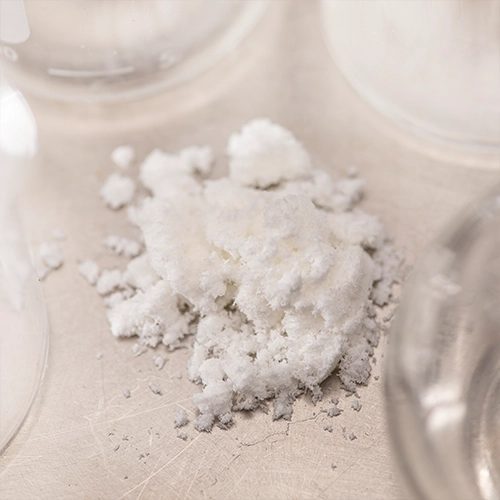
Introducing Mile High Labs CBD Isolate 2.0
CBD Isolate 2.0 is the purest hemp-derived CBD isolate on the market today and boasts little to no odor and a significantly whiter color, enhancing the aesthetic and sensory quality of the product. CBD Isolate 2.0 is different from our flagship CBD Isolate 1.0 and features less than 1.00 ppm of each Δ9-THC, Δ8-THC, THCA, THCV, and CBN—each verified by third-party ISO 17025 and CDPHE certified laboratories. Rest assured, our CBD Isolate 2.0 is not intoxicating and meets the strictest total THC limits, making it compliant with even the most rigorous regulatory standards.
Potency
- ≥ 98% CBD
Key Specifications
- Kosher Certified
- Japan and UK Compliant
Available Sizes:
- 2g Sample
- 100g Formulator
- 1kg
- 5kg


| HDPE container with a quarter-turn screw lid closure reduces handling time and is thoughtfully designed with a strong focus on food safety. It boasts a tamper-evident seal for added security, ensuring the integrity of your valuable products. Furthermore, the drum provides UV protection to shield its contents from harmful light exposure. |
| Characteristics – Crystalline powder |
| Shelf Life – 24 Months from manufacture |
| ≥ 98% CBD |
Learn More About Our Ingredients!
Expand your Business Operations and Value
Water Soluble
From Pioneers to Industry Leaders
The Power of Water Soluble Manufacturing
Sip with Precision: Mile High Labs’ Water Soluble Expertise Guarantees Accuracy and Performance in Every Drop. Microemulsion technology that is superior to conventional emulsification.
New Product Launch
CBD Isolate 2.0
Water Soluble
≤ 0.00001% THC (≤ 0.1 ppm)
200mg/mL 1L = 10,000 Servings
Now Sampling
Manufactured by Mile High Labs
Custom Manufacturing Capabilities
Liquid Microemulsions
Enhance your beverages with our liquid micro-emulsions—offering superior bioavailability, regulatory compliance, and stability, while being free from nano-particles and providing a safer alternative to nano-emulsions.
Functional Ingredients
Transform your beverage ideas into reality with Mile High Labs—expertly crafting custom water-soluble formulations with the functional ingredients you envision, designed to meet market demand and boost your brand’s appeal.
Cannabinoids
Leverage our expertise with in CBN, CBG, and CBD water-solubles, and expanding into minor cannabinoids, featuring advanced 20% loaded formulations for higher concentrations, superior cost-effectiveness, and greater value compared to competitors’ 5-10% loadings.
Multivitamins
Collaborate with Mile High Labs to create custom multivitamin formulations, tailored to your needs—emphasizing health and wellness through our apothecary model. Leverage our expertise, global regulatory knowledge, and innovative approach to drive high-quality beverages that maximize your ROI.
Adaptogens
Partner with Mile High Labs to create high-quality adaptogen-infused beverages. Harness the power of popular adaptogens like ashwagandha to meet the growing consumer demand for holistic health solutions. Our expertise ensures innovative formulations that support stress resilience and mental clarity, positioning your brand at the forefront of the wellness market.
Agglomerated Powder
Enhance your beverage formulations with Mile High Labs’ advanced agglomerated powders. Our technology ensures superior solubility and rapid mixing, perfect for instant beverage applications. Achieve consistent, high-quality results and efficient cannabinoid delivery, meeting consumer demand for fast-acting and reliable products.
Why Our Water Soluble Microemulsion
Liquid Concentrates Reign Supreme
Maximize your investment and experience superior value with our innovative, highly concentrated products. Our formulations deliver unmatched quality and effectiveness without additional additives, ensuring you get the best results while optimizing your costs.
High concentration and cost efficiency
Our flagship products boasts a cannabinoid concentration of 200,000mg of CBD, CBN, or CBG per liter, enabling you to produce up to 20,000 servings per 10mg from just one liter. From a manufacturing perspective, water soluble cannabinoids can be produced at scale more efficiently.
Mile High Labs
20% CBD Isolate Water Soluble Liquid
CBD Per 1L = 200,000mg/L or 200mg/mL

Competitor
5% CBD Isolate Water Soluble Liquid
CBD Per 1L = 50,000mg/L or 50mg/mL

Flagship Cannabinoids: Reliable, Ready, and Inspiring Innovation
Explore our top-tier cannabinoid solutions, always in stock and ready to enhance your formulations. With a 2-year shelf life and extensive market usage, our flagship CBD, CBN, and CBG water-soluble products provide a reliable foundation for your innovative beverage creations.
20% CBD Isolate 2.0 Water Soluble Liquid
- 20% CBD Isolate
- 200,000 mg/L or 200mg/mL
- Kosher Certified
- Micro-Emulsified Concentrate
- 2-year shelf life
- Japan and UK Compliant
Mile High Labs 20% CBD Isolate 2.0 Water Soluble Liquid is a micro-emulsion liquid concentrate that is dispersible in almost any beverage or liquid food. Formulated with pure CBD Isolate 2.0, our water soluble CBD’s ease of use, long shelf-life stability and minimal impact on flavor and mouthfeel make it the ideal CBD beverage solution.
20% CBD Isolate Water Soluble Liquid
- 20% CBD Isolate
- 200,000 mg/L or 200mg/mL
- Kosher Certified
- Micro-Emulsified Concentrate
- 2-year shelf life
Easily pairs with adaptogens and functional ingredients
20% CBN Isolate Water Soluble Liquid
- 20% CBN Isolate
- 200,000 mg/L or 200mg/mL
- Kosher Certified
- Micro-Emulsified Concentrate
- 2-year shelf life
Suitable for wellness and nighttime formulations
20% CBG Isolate Water Soluble Liquid
- 20% CBG Isolate
- 200,000 mg/L or 200mg/mL
- Kosher Certified
- Micro-Emulsified Concentrate
- 2-year shelf life
Versatile and ideal for innovative formulations, enhancing focus and clarity, and supporting overall wellness
20% CBD Isolate with Ashwagandha
Water Soluble Liquid
- 20% CBD Isolate
- 5% Ashwagandha
- CBD Per 1L 200,000 mg/L
- Ashwagandha Per 1L 50,000 mg/L
- Micro-Emulsified Concentrate
- Made to order
20% CBD Isolate with Vitamin D3
Water Soluble Liquid
- 20% CBD Isolate
- CBD per 1L 200,000 mg/L
- D3 – 0.012 µg
- D3 – 4,800,000 IU/L
- Vitamin D3 Per 1L = 120 mg/L
- Micro-Emulsified Concentrate
- 9-month shelf life
- Made to order
20% CBC Isolate Water Soluble Liquid
- 20% CBC Isolate
- CBC per 1L 200,000 mg/L
- Micro-Emulsified Concentrate
- 12-month shelf life
10% CBD Distillate Water Soluble Liquid
- 10% CBD Distillate
- 100,000 mg/L or 100mg/L
- ≤ 0.2% THC
- Kosher Certified
- Micro-Emulsified Concentrate
- 2-year shelf life
10% FreshWater™ Soluble CBD Isolate Liquid
- 10% CBD Isolate
- 100,000 mg/L or 100mg/L
- Kosher Certified
- Micro-Emulsified Concentrate
- Made with natural ingredients
- 2-year shelf life
Free from sodium benzoate, parabens, and preservatives
CBD Isolate Water Soluble Powder
- 18-22% CBD Isolate
- 2-year shelf life
- Dry Blend Versatility
- Clean and Natural
- Agglomerated Options
- Tailored for Food and Beverage
- Made to order
CBD Broad Spectrum Water Soluble Powder
- 18-22% CBD Isolate
- THC ≤ 0.2%
- 2-year shelf life
- Clean and Natural
- Agglomerated Options
- Tailored for Food and Beverage
- Made to order
New Products
Coming Soon!
Water Solubility and Bioavalability
How to solve for low bioavailability of oil in the human body
Approximately 60% of the human body’s weight consists of water, which is why the bioavailability or absorption of oils is typically limited to a range of 5% to 10%. This limitation arises from the fact that oil and water do not readily mix. Water exhibits strong surface tension, a force that arises from the attraction between surface particles and the bulk of the liquid, which tends to minimize the surface area of the liquid.

Surfactants and bioavailability
Revolutionizing cannabinoid delivery
There are several methods involving microtechnology that manufacturers can use to make CBD water-soluble or dispersible. The most common methods involve breaking down the large CBD oil droplets into smaller droplets using the process of ultrasonic cavitation, or high-pressure homogenization.

Emulsifier Solutions
The creation of micelles
The process begins with dissolving CBD isolate or distillate along with a carrier oil and a low HLB emulsifier to form the oil phase. Simultaneously, the water phase, containing water, preservatives, and a high HLB emulsifier, is prepared. Each phase is meticulously crafted with distinct emulsifiers to attain the precise Hydrophilicity-Lipophilicity Balance (HLB) essential for stabilizing the given combination of oils. Subsequently, the two phases are combined and emulsified to achieve the desired product stability.

Micelle
Cationic monomer
When making oil-in-water emulsions, the emulsifiers self organize into micelles that are organized in such a way that the hydrophobic (water hating) tails of the emulsifiers are pointed towards the oil droplets in the core of the micelle, and hydrophilic (water loving) heads are pointing outwards towards the surrounding water. The smaller the micelles, the smaller the oil droplet in the core, the higher is the bioavailability/absorption of that oil droplet in the body.

From Molecule to Market—Stay in the Know
By clicking subscribe you’re confirming that you agree with our Terms and Conditions.
Finished Goods
From Pioneers to Industry Leaders
Turning Ideas Into
Market Ready Products
Transform your product ideas into reality with Mile High Labs. From initial concept to finished goods, we’re dedicated to bringing your vision to life with quality and precision.
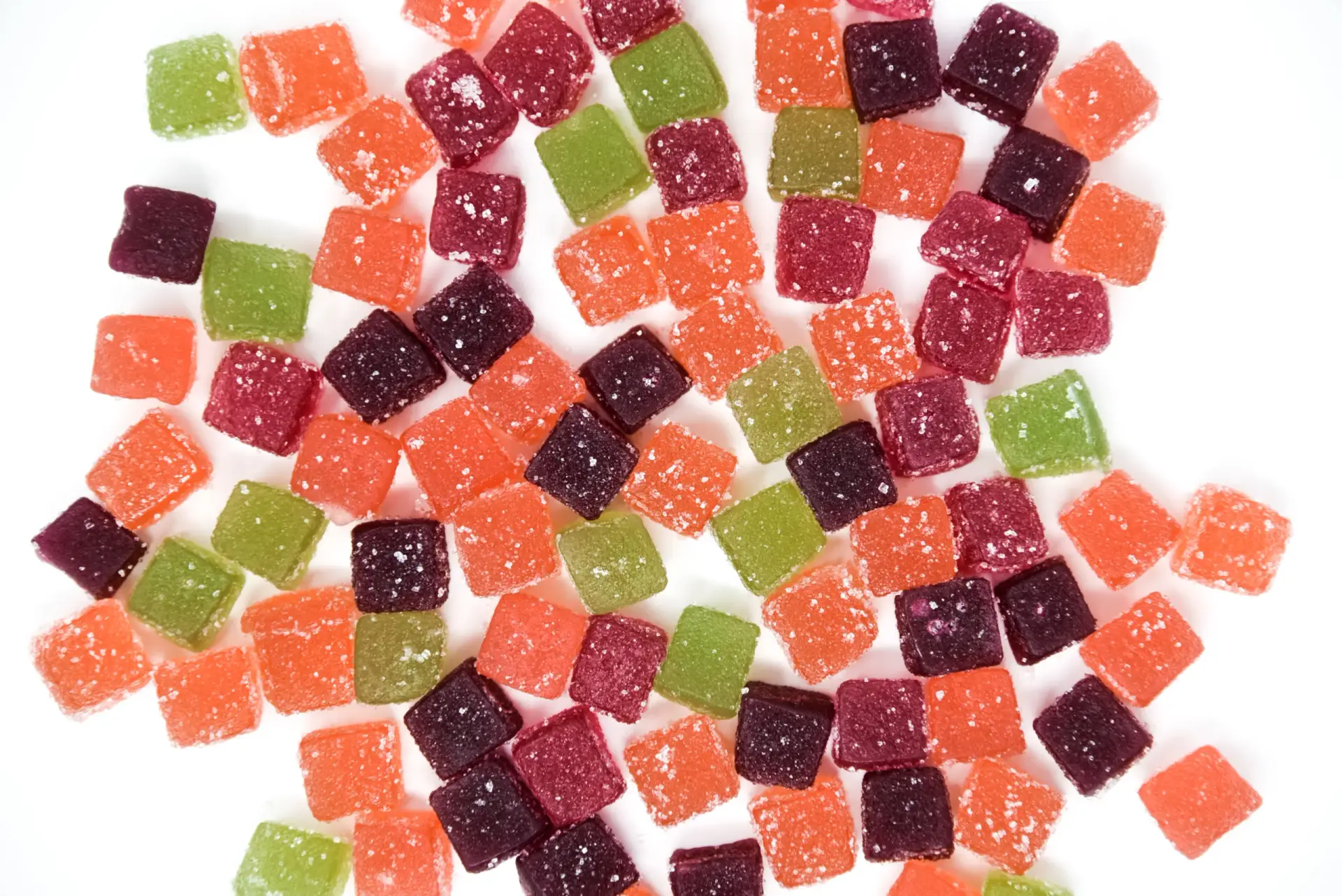
Gummies
Delight your customers with our high-quality, customizable gummies. Whether it’s CBD, vitamins, or unique flavor profiles, we tailor each batch to meet your specific needs.
Softgels
Offer precision and convenience with our expertly crafted softgels. Perfect for delivering a consistent dose of cannabinoids or other active ingredients, every time.
Tinctures
Create versatile and potent tinctures with our advanced formulations. From full-spectrum to isolate, our tinctures are designed for maximum bioavailability and taste.
Do you have an idea for a new product or innovation?
We want to hear from you! At Mile High Labs, we excel in water solubility, cannabinoid production, and commercial manufacturing. Let us drive your next brand innovation to new heights of excellence. Don’t miss out – follow our feed for the latest updates and be the first to experience the future of wellness.

Finished Goods Commercial Manufacturing
From Molecule to Market—Stay in the Know
By clicking subscribe you’re confirming that you agree with our Terms and Conditions.EmailSubscribe
Subscribe for updates on cutting-edge cannabinoids, new launches, and expert insights.
Cannabinoids
Press Release – 12 October 2023 7:30am BST
Response to UK Food Standards Agency updated recommendation for daily consumption of CBD.
Mile High Labs is a market pioneer and leader in the CBD industry and upholds the highest standards of quality, service, and integrity across its range of cannabinoid ingredients and finished goods. We treat food safety and consumer protection with the utmost seriousness and always deliver the safest and highest quality product to our customers.
We acknowledge today’s press release by the UK’s Food Standards Agency (the “FSA”) which has given new precautionary advice recommending that healthy adults do not consume more than 10mg of CBD per day.
We share the FSA’s desire to maintain food safety in relation to CBD products. It is important to note that Mile High Lab’s toxicology data has not been included in the FSA’s risk assessment process and subsequent COT report as only 3 applications were chosen for the assessment of the Acceptable Daily Intake (“ADI”).
If we consider Mile High Labs’ proprietary data set and apply the same criteria as the committee’s approach, this will lead to an ADI of significantly more than the 10mg per day recommended.
We have requested an urgent meeting with the FSA to gain more transparency on the ongoing safety data assessment, and to understand why precautionary advice has been published without assessment of all applicable data.
As part of this process, we are encouraging the FSA to publish individual ADIs based on each application as it is known that different manufacturing processes can lead to different safety profiles and consequently, different ADIs.
Part2 – 13 October 2023 8:00am BST
Based on the FSA’s own criteria, Mile High Labs’ extensive safety data supports an ADI of 70mg or more.
Following on from our press release on 12 October 2023, Mile High Labs has again requested a meeting with the UK Food Standards Agency (the ‘FSA’) and further requested the publication of individual acceptable daily intake (‘ADI’) data for each CBD manufacturer’s Novel Foods application.
The FSA’s precautionary advice recommending that healthy adults do not consume more than 10mg of CBD per day is based on the opinions detailed in the Joint Committee position paper from the Advisory Committee on Novel Foods and Processes (ACNFP) & Committee on Toxicity (COT) published on 12 October 2023. We share the FSA’s desire to maintain food safety in relation to CBD products, but note the opinion is based only on three CBD Novel Food applications submitted to the FSA. Mile High Labs’ application and proprietary data set was not considered in this assessment. The opinion takes into account several uncertainties in these three applications which lowers the derived ADI (by 300 fold from that derived in safety studies).
If exactly the same criteria as set out in by the Joint Committee is applied to Mile High Labs’ CBD proprietary data set, an ADI of 35mg would be derived for Mile High Labs’ CBD. From a scientific perspective, the standard 100-fold uncertainty factor was applied to the 150mg/kg body weight (‘bw’)/day point of departure (‘POD’) alongside the additional uncertainty factor of three, giving an overall uncertainty factor of 300-fold which, when applied to the POD, would result in a putative ADI of 0.5 mg/kg bw (150 mg/kg bw/day POD / (10 x 10 x 3)). For a 70kg adult, 0.5 mg/kg bw x 70 kg would lead to an ADI of 35mg.
However and importantly, this set of criteria does not take into account the fact that Mile High Labs also conducted pharmacokinetic studies to assess bioavailability, which is considered an uncertainty factor. As an uncertainty is resolved, Mile High Labs’ CBD can be accordingly increased to an ADI of 70mg or more.
Mile High Labs acknowledges the FSA’s obligation to update precautionary advice as safety information emerges but equally the FSA also acknowledge in their announcement that their revised decision is only based on three Novel Foods applications. However, it is clear that different manufacturing processes can lead to different safety profiles and as a consequence different ADIs.
Mile High Labs’ highest quality standards ensures that we always deliver the safest and highest quality product to our customers. Based on the FSA’s own criteria, Mile High Labs’ extensive safety data supports an ADI of 70mg or more.

As the CBD market continues to grow, more entrepreneurs are looking to white label CBD products like gummies. The CBD gummies market is anticipated to be worth US$ 743.5 million in 2023. Revenue from the sales of CBD is forecasted to reach US$ 7,524.5 million by 2033. Exhibiting a remarkable 26% CAGR between 2023 and 2033.1 White labeling allows you to rebrand and sell products produced by a supplier, saving you time and resources while ensuring product quality. If you’re considering white labeling CBD gummies, here are five essential tips to help you succeed in this booming industry. The team at Mile High Labs would love to help you out.
Find a Reputable Supplier
The first step in successfully white labeling CBD gummies is finding a reputable supplier. A reliable supplier is essential to ensure product quality, compliance with regulations, and consistent supply. Here’s how to identify one:
- Research and Due Diligence: Look for suppliers with a track record of quality and compliance. Check reviews, request samples, and make sure you understand the gummy ingredients.
- Compliance with Regulations: Ensure the supplier complies with federal and state regulations for CBD products. They should provide you with certificates of analysis for their products.
- Consistent Supply: Reliability is crucial. Choose a supplier with a history of consistent production and delivery.
Establish a Strong Partnership
Building a strong relationship with your supplier is key to a successful white labeling venture. Open communication, trust, and mutual respect are vital components of this partnership. Here’s how to do it:
- Effective Communication: Maintain open lines of communication with your supplier. Discuss your branding requirements, quality standards, and any other concerns.
- Transparency: Be transparent about your expectations and goals. This helps your supplier understand your needs and work towards them.
- Quality Control: Work together to establish and maintain strict quality control standards. Regularly audit and test the products to ensure they meet your requirements.

Develop a Unique Brand
To stand out in the crowded CBD market, it’s crucial to create a unique brand identity for your white-labeled CBD gummies. Here’s how:
- Branding Elements: Design a memorable logo, label, and packaging. Ensure they align with your target market and the image you want to project.
- Differentiate Your Products: Consider adding unique features, flavors, or ingredient levels to your CBD gummies to make them distinct from competitors. Mile High Labs suggests a 25mg serving per piece size with multiple flavors in each jar to deliver on variety.
- Tell Your Story: Use your brand to tell a compelling story. Educate your customers about the benefits of CBD and why they should choose your products.
Marketing and Compliance
- Regulations Understand and adhere to your region’s guidelines for CBD product marketing, including making no unsubstantiated health claims. Pro Tip—use a gummy shape that looks like a nutritional supplement gummy: think cubes or disc shapes only.
- Educational Content: Provide educational content to inform your customers about CBD and its potential benefits. Use your website and social media to educate and build trust.
- Lab Testing and Certificates: Always have up-to-date certificates of analysis (COAs) available to verify the quality and safety of your products.
Customer Support and Feedback
Excellent customer support and feedback systems can help you build loyalty and refine your products. Here’s how to do it:
- Customer Support: Offer responsive customer support to address questions, concerns, and issues promptly. Happy customers are more likely to return and refer others.
- Feedback Loops: Create a feedback loop to gather input from your customers. Use this information to make improvements and better meet their needs.
- Refine Your Product Line: Use customer feedback to expand or refine your product offerings. This will help you cater to the evolving preferences of your target audience beyond gummies.
Conclusion: White labeling CBD gummies can be a lucrative business endeavor if executed correctly. Finding a reputable supplier, building a strong partnership, developing a unique brand, marketing within legal boundaries, and maintaining excellent customer support are all crucial aspects of success in this competitive industry. By following these five tips, you can navigate the complex world of CBD gummy white labeling and build a profitable business while providing quality CBD products to your customers.
Sources
- Future Market Insights, Inc. The CBD gummies market is anticipated to be worth US$ 743.5 million in 2023. Revenue from the sales of CBD is forecasted to reach US$7,524.5 million by 2033.
See the MHL CBD Difference for Yourself!
Comprehensive Review of Cannabichromene (CBC)

Mechanisms of Action Against Pain Signal Propagation, Gastrointestinal Inflammation, and its Role in Neurogenesis and Neuroprotection
This is a comprehensive review of existing scientific work on Cannabichromene and its mechanisms of action inside the human Endocannabinoid cell signaling system. As it is shown, CBC can inhibit pain signal propagation in the body, inhibit inflammatory response in the immune system, and act as a neuroprotector of the central nervous system cells. The non-psychoactive cannabinoids CBC and CBD are known to modulate the activity of proteins involved in nociceptive mechanisms, including transient receptor potential (TRP) channels of vanilloid type-1 (TRPV-1) and of ankyrin type-1 (TRPA-1), as well as proteins facilitating endocannabinoids inactivation. In this paper CBC Phyto-Cannabinoid and the Endocannabinoid system are discussed, as well as the mechanisms of action of CBC are presented, along with compelling evidence of their action against pain signal propagation, inflammation, and neuroprotection.
Phyto-Cannabinoids and Endocannabinoid Signaling System
Cannabichromene (CBC) in it’s acid form (CBCA) is one of the major Phyto- cannabinoids that occurs in the cannabis plant as a product of synthase reactions between the Mother Cannabinoid (CBGA) and various enzymes that exist in the particular strain of cannabis in the environment that provides the necessary thermal, photolytic and oxidative conditions. Along with CBCA, the synthase reactions also give birth to the well-known Cannabidiolic Acid (CBDA) and Tetrahydrocannabidiolic Acid (THCA) major Phyto-cannabinoids(2). After the cannabis plants are harvested and decarboxylated, the acid forms of these 3 major Phyto-cannabinoids turn into their base forms (CBC, CBD, and Δ9-THC), which are considered more active than their acid forms (Figure 1).
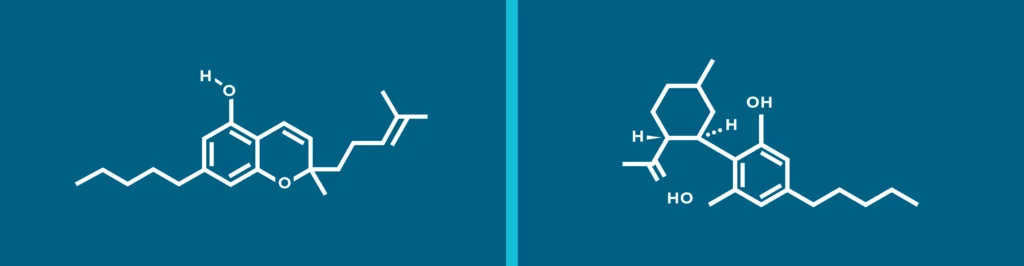
Figure 1. Chemical structure of CBC (left) and CBD (right).
In the presence of pain and inflammation stimuli in the body cells of the central nervous system biosynthesize endocannabinoids anandamide (AEA) and 2-arachydonoylglycerol (2-AG), which are lipid mediators synthesized ‘on demand’ from cell membrane phospholipids(3). Once synthesized, endocannabinoids, activate cannabinoid CB1 and CB2 receptors to elicit a biological response (see Figure2), after which they are inactivated through re-uptake (facilitated by the putative endocannabinoid membrane transporter (EMT)] and enzymatic degradation by fatty acid amide hydrolase (FAAH), and MAGL “killer” enzymes(4,5). The CB1 And CB2 cannabinoid receptors are part of the endocannabinoid signaling system which also includes the enzymes that synthesize and degrade endocannabinoids, as well as possible transporters. The molecular mechanisms for regulating lipid-based signaling events such as cannabinoid receptor signaling are not yet completely understood, although significant progress has been made(6,7). Activation of CB1 and CB2 receptors results in some natural pain and inflammatory stimulus suppression(8), but the amplitude and duration of that suppression is regulated by how fast they are broken down, so this anti-nociceptive effect is weak and short-lived (only about 4-5 minutes in vivo)(9).
Preventing Endocannabinoid Inactivation
As soon as the Endocannabinoids are inactivated and broken down by the “killer” enzymes, CB1 and CB2 receptors are inactivated and the pian and inflammation relief stops. To prolong the pain relief the Endocannabinoid inactivation must be inhibited. Examining the mechanism of action of the Cannabichromene (CBC) we see that it bonds to TRPV-1 cell channels and desensitizes them, which leads to inhibition of the “killer” enzyme release.
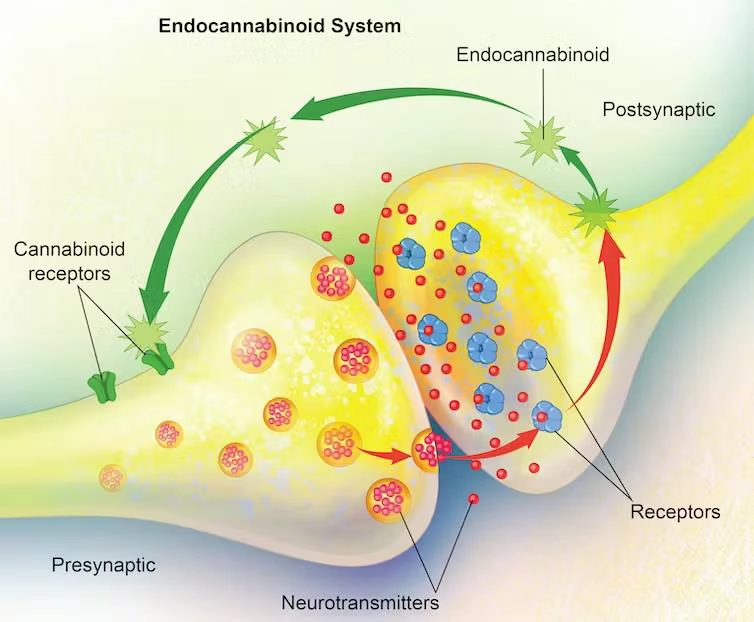
Figure 2. The endocannabinoid system – consisting of the endocannabinoids and the cannabinoid receptors – regulates nerve cell communication at the synapse, thereby playing a role in a variety of bodily functions. Carolina Hrejsa, CMI/iStock/Getty Images Plus via Getty Images.
This leads to CB1 and CB2 receptors remaining active for a much longer time, and a longer pain relief(1). This also leads to Endocannabinoid accumulation in the area where they are released. In time, more and more CB1 and CB2 receptors get activated, which leads to more pain relief. However, at some point the concentration of Endocannabinoids reaches a point where they activate the TRPA-1 channel, which is a pain signal releasing channel, which means that further accumulation of Endocannabinoids in the system is counter-productive to the pain relief. Now, looking at the mechanism of action of Cannabidiol (CBD) we see that CBD bonds to the TRPA-1 channels and desensitizes them, which means that if CBD and CBC are taken together, CBC will desensitize the TRPV-1 channel, which will inhibit the “killer” enzyme release, and CBD will inhibit the TRPA-1 channel, which will inhibit propagation of pain signals as a result of Endocannabinoid concentration in the area. As a result, the pain relief is better and longer. This can be seen in the animal trial performed by (Sabatino et. al.) that measured the electrical activity of neurons as well as tail flick latencies to thermal stimuli of rats that were injected with CBC, CBD and saw that CBC and CBD dose-dependently reduce the on-going activity of ON and OFF pain neurons, inhibited endocannabinoid inactivation, and reduced the pain response to the tail-flick test(1).
In the study by (Sabatino Maione et.al) 260 Wistar rats were divided by groups of 12-16 animals per treatment. Group-1 received an intra-vl-PAG injection of 200nL of vehicle (0.2% dimethyl sulfoxide, DMSO, in artificial CSF). Group-2 received microinjections of (1.5, 3 and 6 nmol) of CBD in the same vehicle. Group-3 received microinjections of (3 and 6 nmol) of CBC in the same vehicle. There were other groups that received injections of various synthetic TRPV-1 and TRPA-1 channel and CB1 and CB2 receptor antagonists along with the cannabinoids to see how the study parameters change in each case (see the study by Sabatino Maione et.al)(1). but we will only discuss the vehicle, CBC and CBD by themselves, and then draw conclusions about the mechanism of action of the CBC/CBD combination.
Designations
Number of rat tail withdrawal reflexes per 10 seconds was called “Spikes (s-1)”. Latency time to the tail withdrawal reflex was designated as “Tail Flick Latency (s)”.
Results of the (Sabatino Maione et.al) Trial
Sabatino Maione et.al. found that CBD at 3nmol concentration in the vehicle significantly elevated the concentration of 2-AG Endocannabinoid by 2.6-fold, but not AEA Endocannabinoid levels. CBC at 6nmol concentration in the vehicle significantly elevated both 2-AG levels, by almost 3.9-fold and AEA levels, by almost 1.7-fold)(1) (see Table 1)
When examining the mechanism of action of Cannabidiol (CBD), it’s observed that CBD binds to and desensitizes the TRPA-1 channels. This desensitization means that when CBD and Cannabichromene (CBC) are used concurrently, there are complementary effects.
Specifically, CBC desensitizes the TRPV-1 channel, inhibiting the release of “killer” enzymes. Concurrently, CBD inhibits the TRPA-1 channel. This dual action effectively hampers the propagation of pain signals due to the concentration of endocannabinoids in the area, leading to enhanced and prolonged pain relief.
Evidence of Animal Studies
Evidence of this synergistic effect was noted in an animal study conducted by Sabatino et al. This study, which measured the electrical activity of neurons and tail flick responses to thermal stimuli in rats injected with CBC and CBD, found that the combination of these compounds dose-dependently reduced the activity of both ON and OFF pain neurons. Additionally, it inhibited endocannabinoid inactivation, and diminished the pain response in the tail-flick test(1).
| Compound | AEA (pmol/g tissue) | 2-AG (nmol/g tissue) |
| Vehicle | 90.1 ± 15.8 | 7.8 ± 2.1 |
| CBD (3 nmol) | 107.7 ± 14.4 | 20.5 ± 4.4 |
| CBC (6 nmol) | 148.7 ± 21.0 | 30.1 ± 6.1 |
Table1. Amounts of AEA and 2-AG Endocannabinoids in the rat periaqueductal grey (PAG) after injection of Cannabidiol(CBD), or CBC(Cannabichromene)(1]).
This is the experimental proof that CBC inhibits downregulation of Endocannabinoid, which results in significant increase in Endocannabinoid concentration, but how does that relate to the anti-nociception?
They also found that CBD and CBC decrease the number of Spikes per 10 second interval from 7-8 for the vehicle (placebo) to about 2-4 in a dose dependent manner, which indicates a decrease in pain signals. Maximum decrease of number of spikes was observed when 3nmol of CBD was injected, and 6nmol of CBC was injected. Figure 3 shows the effect of Vehicle, CBD(1.5, 3, and 6 nmol) and CBC (3 and 6 nmol) on the Tail-Flick latency.
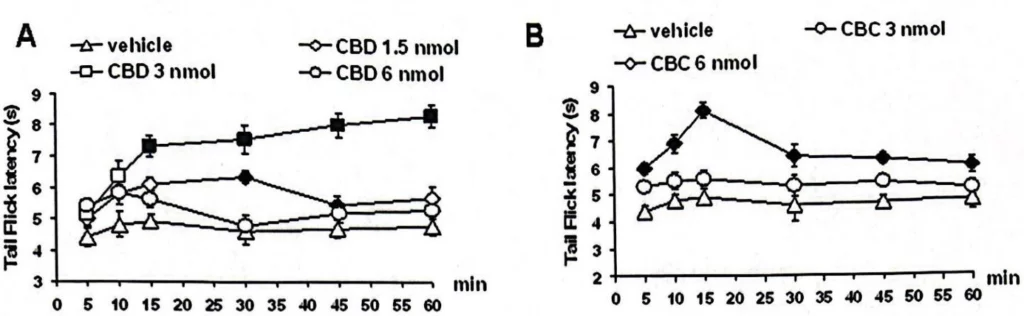
Figure 3. “A” shows the effect of the vehicle and CBD (1.5, 3 and 6 nmol), “B” shows the effect of vehicle and CBC (3 and 6 nmol) on the tail-flick latency at different concentrations of CBD and CBC)(1).
Discussion
The (Sabatibo et.al) trial(1). proves that CBC at 6nmol most effectively activates TRPV-1 channel and desensitizes it, resulting in inhibition of Endocannabinoid downregulation, by preventing a release of “killer” enzymes that break down Endocannabinoids. This leads to Endocannabinoid concentration and most effective anti-nociceptive activity by the body itself (without synthetic analgesic medication). But that anti-nociceptive effect doesn’t last longer than a few minutes, because Endocannabinoids activate the TRPA-1 pain signal channel which increases the pain, which can be see in Figure 2 (B) when the tail-flick latency increases from about 6 seconds to over 8 seconds in 15 minutes and then decreases back to about 6 seconds over the next 15 minutes, whereas CBD at 3nmol increases the tail-flick latency to about 7 seconds in 15 minutes, and keeps increasing it to about 8 seconds in the next 45 minutes and on.
This means if we administer CBD(3nmol) and CBD(6nmol) together in the vehicle, the tail-flick latency would be as in the Figure 4 below:
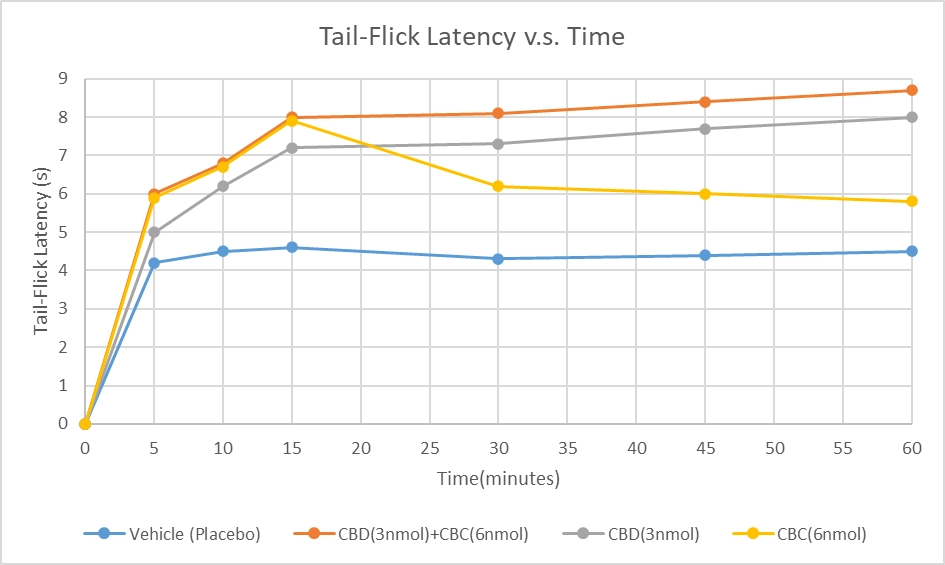
Figure 4. Comparison between Tail-Flick Latency between the Vehicle, CBD(3nmol), CBC(6nmol), and a theoretical representation of what CBD(3nmol) and CBC(6nmol) would result in if they were taken together.
This shows that if CBD(3nmol) and CBC(6nmol) are taken together, the anti-nociceptive effects are felt much quicker and stronger than the vehicle, or if they were taken separately. The duration of the anti-nociceptive effect is also much longer and may show increase over time.
Anti-inflammatory Effect of CBD
Now that we have established the anti-nociceptive effect of Cannabichromene, as well as reviewed the mechanism of its action on inhibition of Endocannabinoid down-regulation by means of desensitizing the TRPV-1 and TRPA-1 channels alone and in combination with Cannabidiol, we switch our attention on the Anti-Inflammatory action of CBC. Endocannabinoids and TRPA-1 channel modulate gastrointestinal motility, and the effect of CBC on the GI motility of mice was investigated in the (Izzo, et. al.) study, where inflammation was induced in the mouse small intestine by croton oil. Endocannabinoid (anandamide and 2-arachidonoyl glycerol), palmitoylethanolamide and oleoylethanolamide levels were measured by LC-MS; TRPA1 and cannabinoid receptors were analyzed by quantitative RT-PCR(13).
The results showed that Croton oil administration was associated with decreased levels of Anandamide(AEA) and Palmitoyl Ethanolamide Endocannabinoids, up-regulation of TRPA1 and CB1 receptors and down-regulation of CB2 receptors, which causes an inflammatory response, but CBC normalized croton oil-induced hypermotility and reduced preferentially EFS-versus ACh-induced contractions, hence reducing the GI tract inflammation. In other words, CBC selectively reduces inflammation-induced hypermotility in-vivo in a manner that is not dependent on cannabinoid receptors or TRPA1(13). Figure 5 represents the electrically-induced contractions in the mouse isolated ileum of control (A) and croton oil-treated mice(B): inhibitory effect of CBC (10-8–10-4 M) alone (vehicle) or in the presence of w-conotoxin, which causes more inflammation (10-8 M). Each point represents mean ± SEM of 7–8 experiments(13). Both in control mice (A) and in croton oil-treated mice (B), w-conotoxin reduced the inhibitory effect of CBC, but the inflammation inhibition is still significant in-spite of the inflammatory factors that exist.
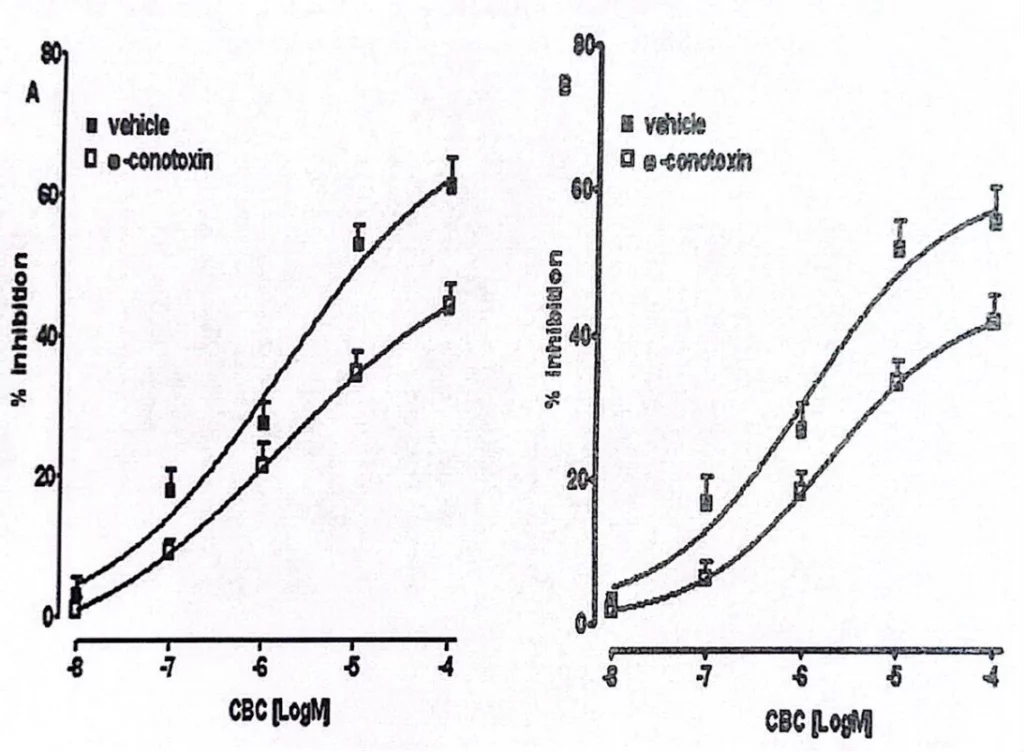
Figure 5. Electrically-induced contractions in the mouse isolated ileum of (A) control and (B) croton oil-treated mice(13).
Discussions
Little is known about the effects of non-psychotropic Phyto-cannabinoids in the gut. While cannabidiol, the most studied among the non-psychotropic Phyto- cannabinoids, was shown to exert a protective effect in the inflamed gut(14, 15, 16, 17), there are very little data in existence in the literature concerning the effect of CBC in the digestive tract. In the (Izzo, et. al.) study(13), it was proven that CBC did not affect upper gastrointestinal transit, colonic propulsion or whole gut transit in healthy mice in vivo, however it reduced croton-oil induced intestinal inflammation and the results clearly show that CBC is pharmacologically active in vivo only when intestinal homoeostasis is perturbed by an inflammatory stimulus.
The observation that CBC administration is not associated with constipation under physiological conditions is relevant as one of the major side effects associated with opiate administration (the most known agent able to reduce intestinal motility) is constipation(13,18). Interestingly, it was also proven that CBC mechanism of inflammation reduction did not involve TRPA-1, TRPV-1, or CB1 and CB2 receptors at all. Instead there is evidence that CBC inhibits inflammation, at least in part, by limiting the availability of intraneuronal Ca2+ via inhibition of N-type Ca2+ channels(19). Although the precise mechanism of the inhibitory effect of CBC requires further studies, the present results are of potential clinical interest because intestinal dysmotility in inflammatory diseases is a well-recognized and clinically accepted phenomenon(20), in which the only drugs currently available to counteract it are often associated with constipation(18).
Role of CBC in Neurogenesis and Neuroprotection.
Neurogenesis is the process by which new neurons are formed in the brain. Neurogenesis is crucial when an embryo is developing, but also continues in certain brain regions after birth and throughout our lifespan(11) (see Figure 6). The mature brain has many specialized areas of function, and neurons that differ in structure and connections. The hippocampus, for example, which is a brain region that plays an important role in memory and spatial navigation, alone has at least 27 different types of neurons(11). The incredible diversity of neurons in the brain results from regulated neurogenesis during embryonic development. During the process, neural stem cells differentiate—that is, they become any one of a number of specialized cell types—at specific times and regions in the brain(11) (see Figure 7).
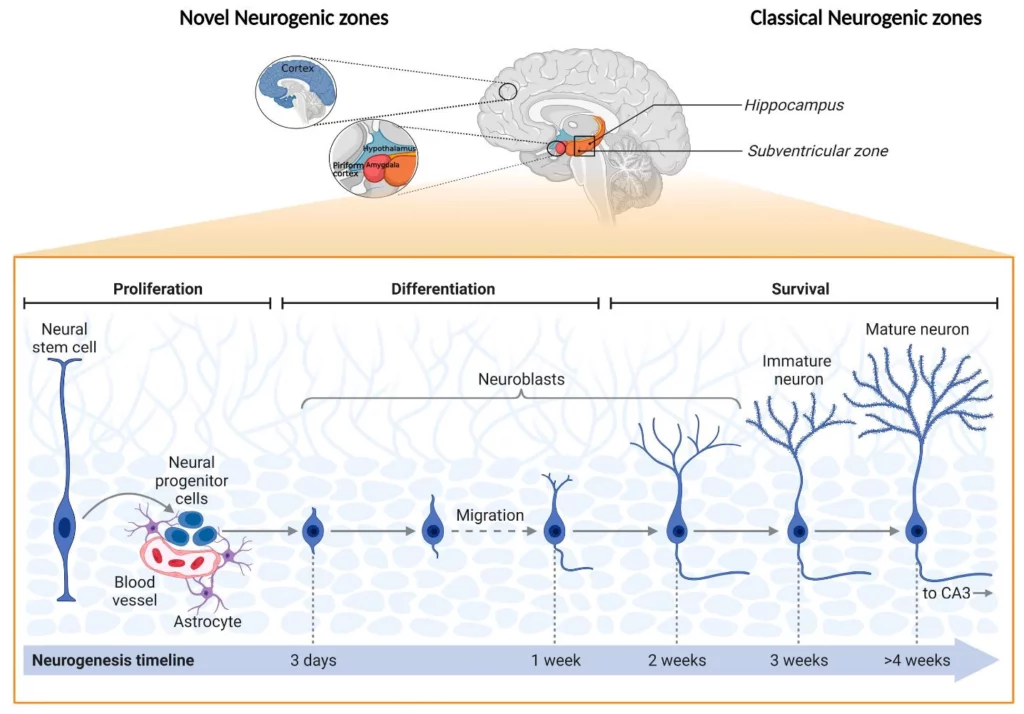
Figure 6. Schematic representation of “novel” and classical adult neurogenic zones, as well as their main cellular stages (12).
Stem cells can divide indefinitely to produce more stem cells, or differentiate to give rise to more specialized cells, such as neural progenitor cells. These progenitor cells themselves differentiate into specific types of neurons(11).
The neural stem/progenitor cell (NSPC) population in the adult brain is essential for brain plasticity under normal physiological conditions as well as during the recovery from brain injuries(10).
To test the effect of CBC on adult neurogenesis directly through the action on NSPCs, (Noriko Shinjyo, Vincenzo Di Marzo) tested the effects of these compounds on the viability of cultured NSPCs derived from the adult mouse brain, using the MTT assay and found that CBC significantly raised the cell viability(10), proving Neuroprotective properties as well as its significant role in Neurogenesis.
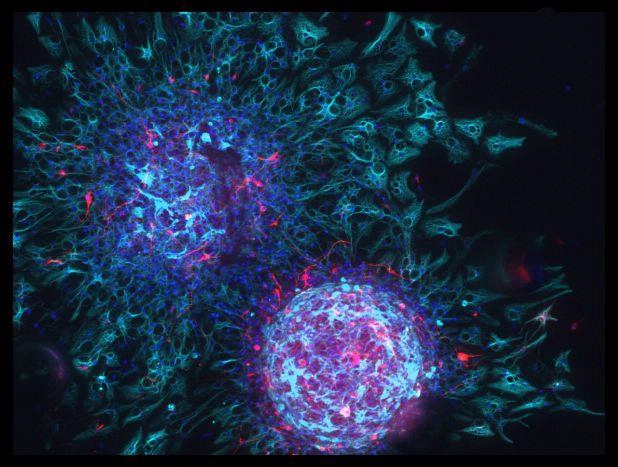
Figure 7. Neural stem cells can produce new neural cells of any type. When stem cells from the brain are isolated and grown in a dish, they continuously divide and create large spherical masses of cells, similar to the two shown here. Each spherical mass, called a neurosphere, is produced by a single stem cell. When exposed to different chemicals, the cells turn into either neurons (red) or glia (cyan). Cell nuclei are shown in dark blue. (Image: Chanel Taylor / QBI) (11)
Conclusion
The CBC studies are limited and mostly conducted on animals like mice, but it does show promise and necessity for more research in this space, particularly human clinical studies. As was shown in this review, CBC only goes to work if there are issues with pain, inflammation in the gastrointestinal tract, or neurogenesis, or neuroprotection. If there is significant pain it bonds to TRP cell channels and blocks production of “killer” enzymes, which in turn inhibits Endocannabinoid breakdown and prolongs pain relief initiated by the CB receptors, especially if taken with CBD. If there is GI inflammation it inhibits the N-type Ca2+ channels in GI cells and inhibits the inflammatory response of contracting and expanding GI tract. If there are issues with cell viability in the brain it acts as a neuroprotector.
Sources
- Sabatino Maione, Fabiana Piscitelli, Luisa Gatta, Daniela Vita, et. al. “Non-psychoactive cannabinoids modulate the descending pathway of antinociception in anesthetized rats through several mechanisms of action”. British Journal of Pharmacology, DOI: 10.1111/j.1476-5381.2010.01063.x
- Brian F. Thomas, Mahmoud A. ElSohly“The Botany of Cannabis sativa L.”. The Analytical Chemistry of Cannabis, (Quality Assessment, Assurance, and Regulation of Medicinal Marijuana and Cannabinoid Preparations) 2016, Pages 1-26.
- Angelo A Izzo, Raffaele Capasso, Gabriella Aviello, Francesca Borrelli. “Inhibitory effect of cannabichromene, a major non-psychotropic cannabinoid extracted from Cannabis sativa, on inflammation-induced hypermotility in mice” British Journal of Pharmacology, 2012 Jun; 166(4): 1444–1460
- Di Marzo V.“Targeting the endocannabinoid system: to enhance or reduce?” Nature Review Drug Discovery. 2008;7:438–455
- Pertwee RG. “Emerging strategies for exploiting cannabinoid receptor agonists as medicines”. British Journal of Pharmacology 2009;156:397–411
- Patricia H. Reggio“Endocannabinoid Binding to the Cannabinoid Receptors: What Is Known and What Remains Unknown”. Curr Med Chem. 2010; 17(14): 1468–1486
- Katona L, Freund TF“Endocannabinoid signaling as a synaptic circuit breaker in neurological disease”. Nat. Med. 2008;14:923–930
- Adarsh Thomas Anthony, Shermeen Rahmat, Prerna Sangle“Cannabinoid Receptors and Their Relationship With Chronic Pain: A Narrative Review”, Cureus. 2020 Sep; 12(9): e10436
- Jason Socrates Bardi“Turning Off Pain’s Pathways”, The Scripps Research Institute Journal, Volume 1, Issue 22, August 13, 2001
- Noriko Shinjyo, Vincenzo Di Marzo“The effect of cannabichromene on adult neural stem/progenitor cells” Neurochemistry International 63 (2013) 432-437
- “What is Neurogenesis?” The University of Queensland, Australia, Queensland Brain Institute
- Andrais Vaz, Ines Ribeiro, Luisa Pinto “Frontiers in Neurogenesis”, Cells 2022, 11(22), 3567
- Angelo A Izzo et. al.“Inhibitory effect of Cannabichromene, a major non-psychotropic cannabinoid extracted from Cannabis sativa, on inflammation-induced hypermotility in mice. Br J Pharmacol 2012 Jun;166(4):1444-60. doi: 10.1111/j.1476-5381.2012.01879.x
- Capasso R, Borrelli F, Aviello G, Romano B, Scalisi C, Capasso F et al. (2008a) “Cannabidiol, extracted from Cannabis sativa, selectively inhibits inflammatory hypermotility in mice. British Journal of Pharmacology, 154: 1001–1008
- Borrelli F, Izzo AA (2009)“Role of acylethanolamides in the gastrointestinal tract with special reference to food intake and energy balance.” Best Pract Res Clin Endocrinol Metab 23: 33–49
- Jamontt JM, Molleman A, Pertwee RG, Parsons ME (2010).“The effects of Delta-tetrahydrocannabinol and cannabidiol alone and in combination on damage, inflammation and in vitro motility disturbances in rat colitis.” British Journal of Pharmacology, 160: 712–723
- Alhamoruni A, Wright KL, Larvin M, O’Sullivan SE (2012).“Cannabinoids mediate opposing effects on inflammation-induced intestinal permeability.” British Journal of Pharmacology, 165: 2598–2610
- Jafri S, Pasricha PJ (2001).“Agents used for diarrhoea, constipation, and inflammatory bowel disease; agents used for biliary and pancreatic disease.” The Pharmacological Basis of Therapeutics, 10th edn. McGraw-Hill: New York, pp. 1037–1058.
- Leal-Cardoso JH, Lahlou S, Coelho-de-Souza AN, Criddle DN, Pinto Duarte GI, Santos MA et al. (2002).“Inhibitory actions of eugenol on rat isolated ileum.” Can J Physiol Pharmacol 80:901–906
- Ohama T, Hori M, Ozaki H (2007).“Mechanism of abnormal intestinal motility in inflammatory bowel disease: how smooth muscle contraction is reduced?” Journal of Smooth Muscle Res 43: 43–54

Reviewed By:
Vardan Ter-Antonyan
Manager, R&D Formulations
ResearchUnderstanding CBC Isolat
Cannabichromene, or CBC, is a compelling yet often overlooked cannabinoid found in cannabis. Unlike THC, it is non-intoxicating, offering a unique appeal in the diverse world of cannabinoids. CBC Isolate represents the purest form of Cannabichromene, isolated from other plant materials, ensuring both purity and concentration.
Why CBC Isolate is a Game-Changer
Integrating CBC Isolate into your product line can distinguish your brand in a market dominated by CBD products. The purity of CBC Isolate guarantees a high-quality, consistent product, a critical factor in consumer satisfaction. Furthermore, CBC Isolate’s non-intoxicating nature makes it a versatile option for a wide range of consumers.
The Science Behind CBC Isolate
CBC interacts uniquely with the human body’s endocannabinoid system. This interaction is distinct from that of THC or CBD, suggesting that CBC may have its own set of properties. The extraction and isolation process of CBC ensures that the final product is over 99% pure, making it an ideal ingredient for various applications.
Marketing CBC Isolate: Education and Brand Differentiation
Consumer education is vital in marketing CBC Isolate. Informing potential customers about its benefits and differences from other cannabinoids can help in creating a knowledgeable customer base. Offering CBC Isolate products allows your brand to stand out, providing something unique and innovative in a competitive market.
Synergistic Combinations: Enhancing CBC Isolate
Combining CBC with other cannabinoids like CBD, CBG, and CBN can enhance its appeal. Each of these cannabinoids has its own set of properties, and when combined with CBC, they may offer a broader spectrum of benefits. This approach aligns with the growing consumer interest in personalized and holistic wellness solutions.
Bulk CBC Isolate: Economic and Efficient
For brands looking to scale, Bulk CBC Isolate offers an efficient solution. It not only ensures a consistent supply but also helps maintain product quality. This approach is particularly beneficial for large-scale production, where consistency and quality are paramount.
Legal and Regulatory Landscape
It’s crucial to navigate the legal and regulatory landscape carefully. Ensure compliance with all local, state, and federal regulations regarding the sale and marketing of CBC products. Adhering to FDA guidelines, especially in terms of health claims and product labeling, is essential.
The Future of CBC Isolate
The cannabinoid market is rapidly evolving, and CBC Isolate is poised for growth. As research continues and consumer awareness increases, CBC Isolate could become a significant player in the cannabinoid space. Innovation in product development, such as combining CBC with other natural ingredients, can open new avenues for brands.
Maximizing the Potential of CBC Isolate: Combinations with Cannabinoids and Non-Cannabinoid Ingredients
Figure 1. Chemical structure of CBC (left) and CBD (right).
The cannabinoid market is rapidly evolving, and CBC Isolate is poised for growth. As research continues and consumer awareness increases, CBC Isolate could become a significant player in the cannabinoid space. Innovation in product development, such as combining CBC with other natural ingredients, can open new avenues for brands.
The versatility of CBC Isolate makes it an ideal candidate for combination with other cannabinoids and a range of non-cannabinoid ingredients. This approach can enhance both the efficacy and appeal of wellness products. Let’s explore how CBC can be combined with other ingredients to create innovative and effective products.
Combining CBC with Other Cannabinoids
- CBD and CBC: A Balanced Duo
- Complementary Effects: CBD, known for its calming and therapeutic properties, can complement the potential benefits of CBC.
- Consumer Appeal: Products combining CBD and CBC can attract consumers familiar with CBD while introducing them to the benefits of CBC.
- CBG and CBC: The Power Pair
- Synergy: CBG, often called the ‘mother of all cannabinoids’, may work synergistically with CBC, enhancing the overall effect of the product.
- Targeted Solutions: This combination can be tailored for specific wellness goals, appealing to consumers looking for targeted cannabinoid solutions.
- CBN and CBC: For Relaxation and Wellness
- Complementary Properties: CBN is typically associated with relaxation and sleep. When combined with CBC, it might offer a comprehensive wellness experience.
- Night-Time Products: This combination can be particularly effective in products designed for relaxation and nighttime use.
Incorporating Non-Cannabinoid Ingredients
- Essential Oils and Terpenes
- Aromatic Benefits: Essential oils and terpenes can enhance the sensory experience of CBC products, adding aromatic benefits.
- Enhanced Effects: Certain terpenes may complement the properties of CBC, potentially enhancing its overall effect.
- Herbal Extracts
- Holistic Approach: Combining CBC with herbal extracts like chamomile, lavender, or ashwagandha can appeal to consumers interested in natural wellness.
- Targeted Formulations: These combinations can be formulated to target specific wellness goals, such as relaxation, stress relief, or immune support.
- Vitamins and Minerals
- Nutritional Support: Adding vitamins (like Vitamin C or D) and minerals (like zinc or magnesium) can enhance the nutritional profile of CBC products.
- Comprehensive Wellness Products: Such combinations can cater to health-conscious consumers looking for products that offer more than just cannabinoid benefits.
- Natural Oils and Butters
- Skincare Benefits: For topical products, combining CBC with natural oils (like coconut or jojoba oil) and butters (like shea or cocoa butter) can enhance skin hydration and nourishment.
- Cosmetic Appeal: These ingredients can improve the texture and feel of topical products, making them more appealing to use.
- Amino Acids and Proteins
- Enhanced Bioavailability: Certain amino acids can enhance the bioavailability of cannabinoids, potentially making the products more effective.
- Fitness and Recovery Products: Such combinations are ideal for products targeting fitness enthusiasts and those focused on muscle recovery.
Product Development Opportunities
With these combinations, the possibilities for product development are vast:
- Wellness Tinctures and Oils: Combining CBC with other cannabinoids and herbal extracts for sublingual applications.
- Topical Creams and Balms: Utilizing CBC with natural oils and butters for skincare and localized relief.
- Edibles and Capsules: Infusing CBC with vitamins and minerals for holistic health supplements.
- Beauty and Skincare Products: Leveraging the potential anti-inflammatory properties of CBC in combination with skin-nourishing ingredients.
Conclusion
The potential of CBC Isolate in product development is significantly enhanced when combined with other cannabinoids and a variety of non-cannabinoid ingredients. Such combinations not only offer the possibility of improved efficacy but also cater to a broader range of consumer needs and preferences. By exploring these combinations, brands can develop innovative, effective, and appealing cannabinoid-based wellness products.
CBC Isolate offers a unique blend of precision, purity, and potential in the cannabinoid market. Its versatility, combined with the growing consumer interest in diverse cannabinoids, makes it an attractive addition to any brand looking to innovate and differentiate. Staying informed about ongoing research and regulatory changes is crucial for leveraging the full potential of CBC Isolate in your product line.
Frequently Asked CBC Questions
Cannabichromene (CBC) is a cannabinoid, which is a type of compound found in the cannabis plant. CBC, like other cannabinoids, is derived from the cannabis plant’s leaves, flowers, and stems. Specifically, CBC is produced through a process involving the decarboxylation (the removal of a carboxyl group) of cannabichromenic acid (CBCA), the acidic precursor to CBC.
Can you combine CBC with other cannabinoids?
Yes, you can combine CBC (Cannabichromene) with other cannabinoids. This practice is common in the cannabinoid industry to enhance the overall effects and benefits of the products. For example, combining CBC with CBD, CBG, or CBN can offer a more holistic approach, potentially providing a broader spectrum of benefits and catering to diverse consumer needs.
How is CBC Isolate different from CBD?
While both CBC and CBD are non-psychoactive cannabinoids, they differ in their chemical structure and potential effects. CBC Isolate is a distinct compound with its own unique properties, separate from those of CBD.
Can CBC Isolate get you ‘high’?
No, CBC Isolate does not produce a ‘high.’ It is a non-psychoactive cannabinoid, meaning it does not have the intoxicating effects associated with THC, the psychoactive compound in cannabis.
What are the potential benefits of using CBC Isolate?
While we avoid making specific health claims, CBC Isolate is being researched for its potential properties, which may include supporting wellness and skin health. However, more scientific research is needed to fully understand its benefits.
How can CBC Isolate be used in products?
Integrate CBC Isolate into various formulations, including tinctures, capsules, balms, creams, and edibles. CBC Isolate is insoluble in water but is recommended for solubility in oils and organic solvents.
How do you store CBC Isolate?& Development
CBC Isolate should be stored in a cool, dry place away from direct sunlight to maintain its purity and efficacy. The recommended storage temperature for CBC Isolate is 5C +/- 3C (41F +/- 5F). It is best to use a container designed with food safety in mind, utilizing a food safe coating, tamper-evident seal, and plastic plug. UV protection is key to protect the contents from light exposure. Proper storage ensures that the isolate remains effective over its shelf life.
The Future-Forward Approach of Leveraging Cannabinol (CBN) for Synergistic Power

Explore the fascinating world of Cannabinol (CBN), a compound that is reshaping our understanding of cannabinoids and their potential. At Mile High Labs, we’re committed to advancing research and product development in this intriguing field. We are especially known for our CBN Isolate Water Soluble and CBN Isolate products.
CBN Isolate and Cannabinoid Receptors (CB1 and CB2)
CBN interacts uniquely with the body’s CB1 and CB2 receptors. This interaction is the cornerstone of CBN’s wide-ranging potential. Understanding these mechanisms opens doors to new possibilities in wellness and therapeutic applications.
CBN’s Role in Bone Growth and Collagen Production
Recent research sheds light on CBN’s influence on bone growth and collagen production. This insight is crucial for developing innovative solutions that harness CBN’s potential in supporting skeletal health and recovery.
Anti-Bacterial Properties of CBN
CBN’s properties extend beyond the commonly known. Its potent anti-bacterial capabilities position it as a promising candidate for future research in combating resistant bacterial strains.
Mile High Labs’ Superior Water Soluble Formulations
We specialize in Water Soluble Formulation, offering CBN Isolate that’s both effective and efficient. Our products, including water soluble powders and liquids of CBD, CBG, and CBN, set the standard in the industry.
Advantages of Mile High Labs Water Soluble CBN
- High Active Loading: Our water soluble cannabinoids boast a remarkable 20% active loading, meaning each mL contains 200mg of cannabinoids. This efficiency significantly reduces the necessary quantity and cost compared to competitors’ 5%-10% loading.
- Extended Stability: Our products demonstrate an impressive 24-month stability in physical, microbiological, and chemical aspects. Competitors can only claim up to 12 months, ensuring our products’ longevity and reliability.
- Natural Ingredients: We prioritize natural ingredients, including emulsifiers, over synthetic alternatives like Polysorbates, ensuring a safer, healthier product.
- Optimized Micelle Size: Our emulsions feature micelles with a carefully optimized size distribution (100nm to 350nm), enhancing bioavailability, reducing bitterness, and maintaining stability. This contrasts with competitors’ products that either fall outside the permissible size range for the UK and EU markets or compromise cannabinoid bioavailability.
- Packaging – Aluminum Bottle with Polyethylene Liner: The bottle we utilize is crafted with food safety as a primary concern.

Mile High Labs is at the forefront of cannabinoid innovation. Our commitment to quality and efficacy positions us uniquely to meet the evolving needs of the market. As we continue to explore the potential of cannabinoids like CBN, trust Mile High Labs to provide the best in water soluble cannabinoid solutions.
Visit our Science of Cannabinoids page for a more in depth look at Cannabinol (CBN) from our Manager, R&D Formulations, Research and Development – Vardan Ter-Antonyan, Mile High Labs.
Comprehensive Review of Cannabinol (CBN)
Synergies with other Cannabinoids, Mechanisms of Action, and Benefits Supported by Clinical Data
This is a comprehensive review of existing scientific work and clinical studies on Cannabinol (CBN) and its mechanisms of action inside the human body. Clinical evidence of dose dependent synergistic effect of taking CBN with other cannabinoids is discussed, along with revealing the truths and myths of its benefits. As with most cannabinoids, the accurate human clinical and scientific evidence of CBN benefits is very hard to find, so this review focuses on the existing clinical trials, analyzes the results and summarizes the findings into one comprehensive report. Findings suggest that CBN may be beneficial as a relaxation and sleep aid, pain relief support, anti-bacterial agent and help against various dermatologic and bone disorders. Evidence of synergistic effects of using CBN coupled with other cannabinoids also exists. But first, lets discuss what CBN is, and how it interacts with the human endocannabinoid system.
Cannabinol (CBN) and Cannabinoid Receptors (CB1 and CB2)
As a result of synthase reactions between the Mother Cannabinoid (CBGA) and various enzymes that exist in the particular strain of hemp in the environment that provides the necessary thermal, photolytic and oxidative conditions, major Phyto-cannabinoids (CBDA, Δ9-THCA, and CBCA) are synthesized. However over time, due to heat, light and oxidation Δ9-THCA degrades into Cannabinolic Acid (CBNA).
After the hemp plants (<0.3% of total Δ9-THC) are harvested and decarboxylated, Cannabinolic Acid (CBNA) turn into its base form Cannabinol (CBN), which is considered more active and potent than its acid form (Figure 1). In order to understand how CBN works in the human body we will first review the cells and receptors it interacts with in the human endocannabinoid system.
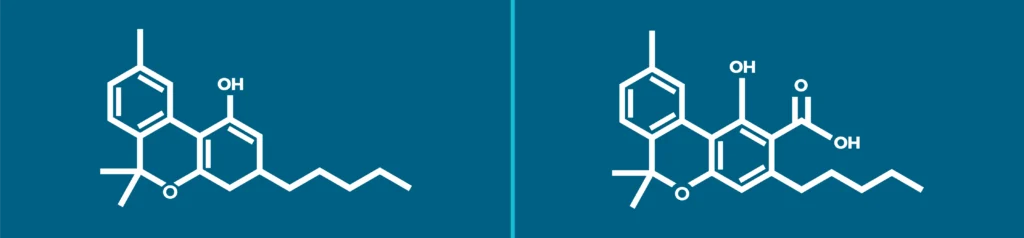
Figure 1. Chemical structures of A: Cannabinol (CBN) and B: Cannabinolic Acid (CBNA)
The biological effects of cannabinoids are mediated by Cannabinoid Receptors CB1 and CB2(1). CB1 receptors are present in the membranes of the Central Nervous System (CNS) cells that are located throughout the body, but mostly concentrated in the brain (2). CB2 receptors are present in the membranes of the immune system cells and even though those cells can also be found throughout the body, they are mostly concentrated in the GI Tract(2). Research has shown that activation of CB1 and CB2 receptors results in the biological responses in the brain, liver, reproductive system, immune system, cardiovascular system, musculoskeletal system, heart and the GI tract (See Figure 2(3)).
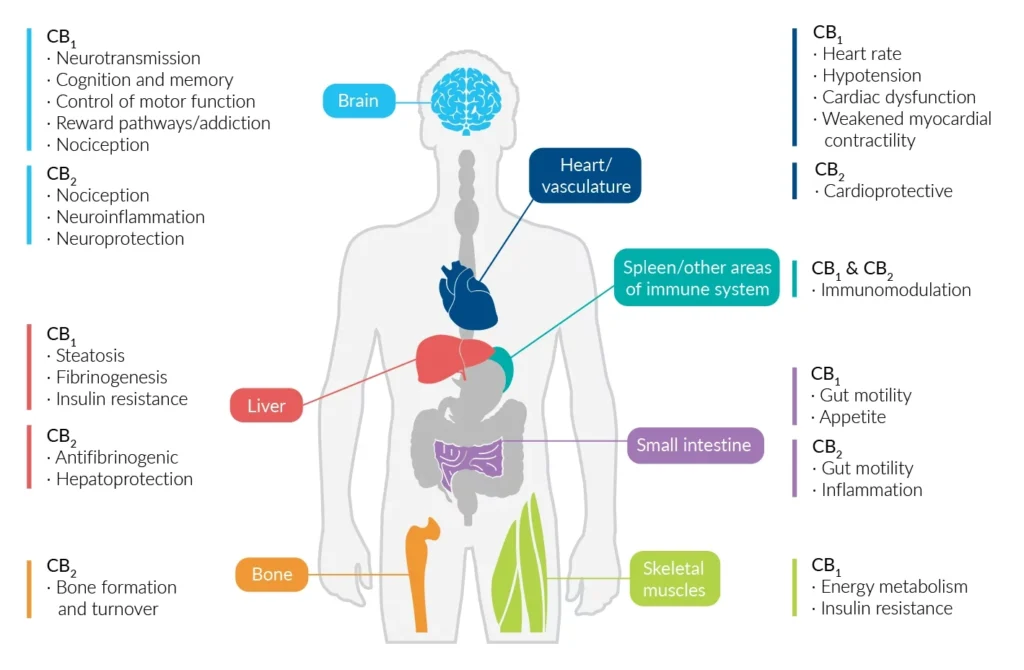
Figure 2. Major localization sites and associated functions of the CB1 and CB2 receptors in the human body. (Picture taken from (3))
CBN in Combination with CBD as a Pain Relief Support
A 2019 clinical study performed by Hayes Wong and Brian E. Cairns investigated whether non-psychoactive cannabinoids, Cannabidiol (CBD), Cannabinol (CBN) and their combinations can increase pain tolerance. The study has shown that a (1:1) blend of CBN and CBD provided longer-lasting pain relief than CBN alone, or CBD alone, showing that when it comes to pain management, CBN may be a great complement to CBD, and while CBN alone is a viable pain relief option, a combination of CBN and CBD is even better (4). Figure 3 shows the influence of CBD and CBN on the pain tolerance compared to the Vehicle, which is the Control.
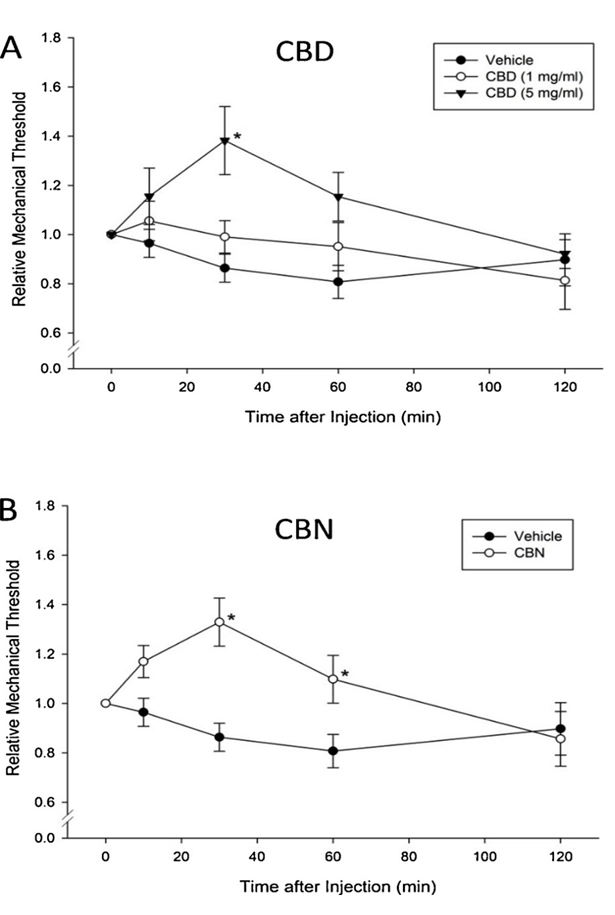
Figure 3. (A) (4) shows how the relative pain threshold changes over 2 hours, after CBD at 1mg/ml and 5mg/ml as well as the vehicle by itself are administered. The study clearly shows that the pain tolerance sharply increases in a dose dependent manner. (B) (4) shows a similar pain threshold changes over 2 hours, after CBN at 1mg/ml compared to the vehicle by itself.
However, various combinations of CBD and CBN (at the ratios of 1:1 and 5:1) show vastly different results (see Figure 4).
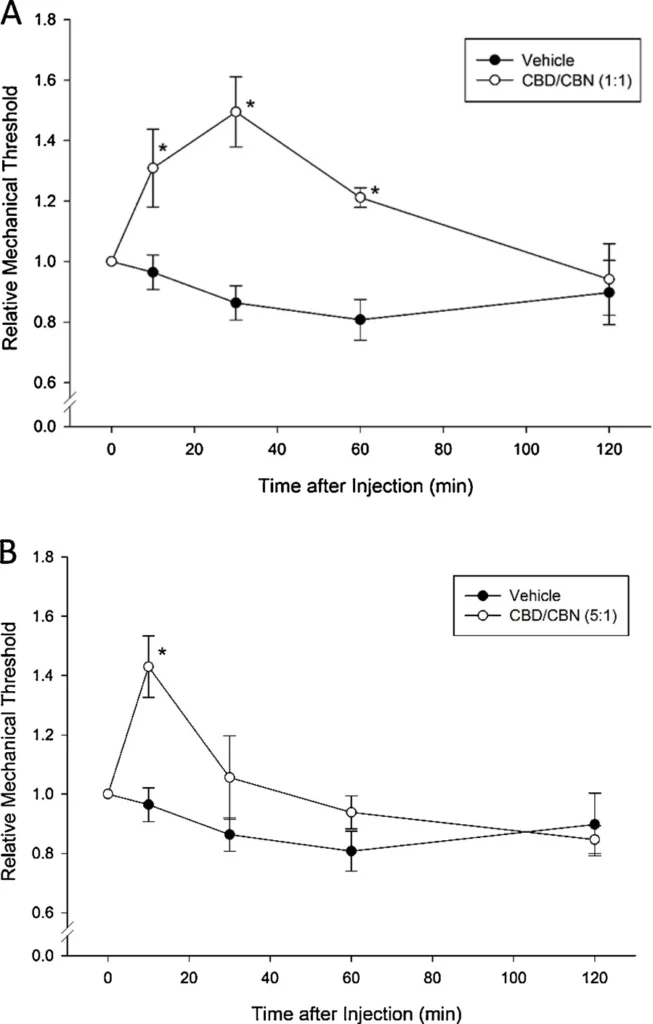
Figure 4. (A) (4) shows that combination of CBD:CBN (1:1) shows a superior relative pain tolerance of about 1.5 within about 30 minutes, followed by a decrease to about 1.0 within the next 90 minutes, showing that the equal combination of CBD and CBN results in the best relative pain tolerance for the longest duration compared to CBD , CBN and the vehicle individually. (B) (4)shows that a (5:1) combination of CBD to CBN reduces the intensity and duration of the pain relief in comparison to the (1:1) combination of CBD to CBN, which may indicate an inhibitory effect of higher concentration of CBD on CBN (4).
These results are not surprising since after administration CBN interacts directly with CB1 and CB2 receptors in the immune and nervous systems of the Endocannabinoid System, whereas CBD interacts with the TRP channels in the cell membranes. Figure 2 demonstrates that any cannabinoid that bonds to CB1, or CB2 receptors causes anti-nociceptive effects, or analgesia. For example: Δ9-THC is by far the strongest analgesia inducing cannabinoid known simply because its affinity to CB1 receptors is the strongest. CBN on the other hand, has a strong affinity towards CB2 receptors, and a weaker affinity towards CB1 receptors, which means that the physiological response to CBN includes analgesia and anti-inflammation among many other responses. It is also well known that CBD activates and desensitizes TRPA1 channels which are responsible for pain signal propagation. So the study results make sense, because a combination of activating CB1 and CB2 receptors along with desensitization of TRPA1 channels, which modulate pain signals, in a balanced way (1:1 CBD:CBN) should result in pain relieve. However, the non-psychoactive cannabinoids CBD and CBN were less efficacious than Δ9-THC at the same concentration (1 mg/ml) in reducing pain and sensitization(4). This is not surprising, as these cannabinoids have weaker binding affinity for the CB1 receptors when compared to THC: CBN (˜1/10th), CBC (˜1/20th) and CBD (˜1/100th)(5). However CBD and CBN are non-psychoactive, hence using them for pain relief is more advantageous than Δ9-THC, because psychoactive effect of Δ9-THC is an important limitation of THC use for analgesia(6, 7, 8).
Effect of CBN on Bone Growth and Collagen Production
Recently, the cannabinoid receptors CB1 and CB2 were shown to modulate bone formation and resorption in vivo, although little is known of the mechanisms underlying this (9). The clinical study reviewed below found that cannabinoids, especially CBN, may stimulate the recruitment of Stem Cells (SC) from the bone marrow mediated via the CB2 receptor, which may be the mechanism responsible for the increased bone formation seen after cannabinoid treatment in vivo. CB2 receptors have been found in normal skin and now in bone tissue (10, 11), where they are thought to play a role in regulating bone mass in humans (12), and CB1 receptors play a role in the regulation of bone mass mediating bone resorption, thus preserving bone mineral density(11).
It is widely accepted that the stem cells from bone marrow play a central role in bone physiology and pathology, and they can transform into other cell types including cardiomyocytes(13), muscle cells(14), and neural cells(15). The physiological function of Bone Marrow Stem Cells is still unclear; however, it is possible that they are involved in tissue healing processes such as muscle regeneration(16) and fracture healing(17).
In 2007 (Scutt and Williamson) treated the Bone Marrow Stem Cell Fibroblastic Colony-Forming Unit (CFU-f) cultures with a variety of naturally occurring cannabinoids, including Cannabidivarine (CBDV), Cannabigerol (CBG), Cannabinol (CBN), Cannabidiol (CBD), THC, and Tetrahydrocannabivarin (THCV), and all at 10 µM, produced a stimulation of colony formation in all cases, which was accompanied by collagen synthesis as well (see Figure 5)(9).
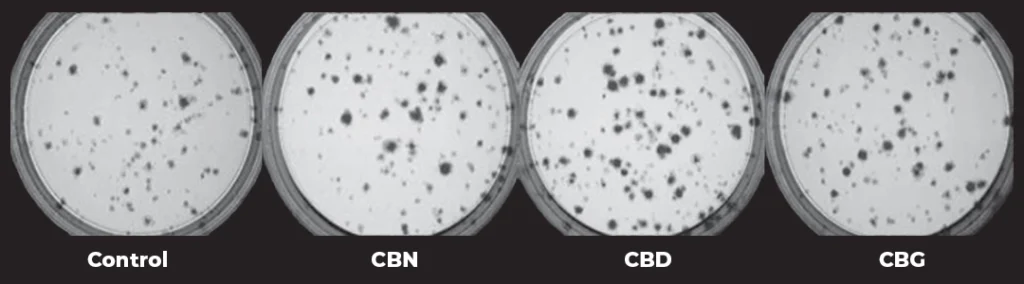
Figure 5(9). The effect of CBN, CBD and CBG cannabinoids on connective tissue colony formation by Bone Marrow Stem Cells in-vitro compared to the Control.
Also observed were increases in Collagen and Alkaline Phosphatase (APase) (see Figure 6)(9), which is a marker for B cell activation(18), which is a key player of the adaptive immune response in mammals(19). B-cell production in humans is a lifelong process that starts in the fetal bone marrow after birth(19).
The study by (Scutt and Williamson) demonstrated that cannabinoids like CBN, CBD and CBG can stimulate the formation of Stem Cells inside the Bone Marrow, which play a central role in a wide range of physiological and pathophysiological processes, including bone formation, fracture healing, muscle regeneration, vascular damage, atherosclerosis, bone marrow fibrosis, as well as support of hematopoietic stem cells(9). In addition, many therapeutic applications for the Bone Marrow Stem Cells have been suggested, including among many others myocardial regeneration; tissue engineering of bone, cartilage, and vascular tissue; and cell or gene therapy of genetic conditions such as osteogenesis imperfecta and muscular dystrophy(9).
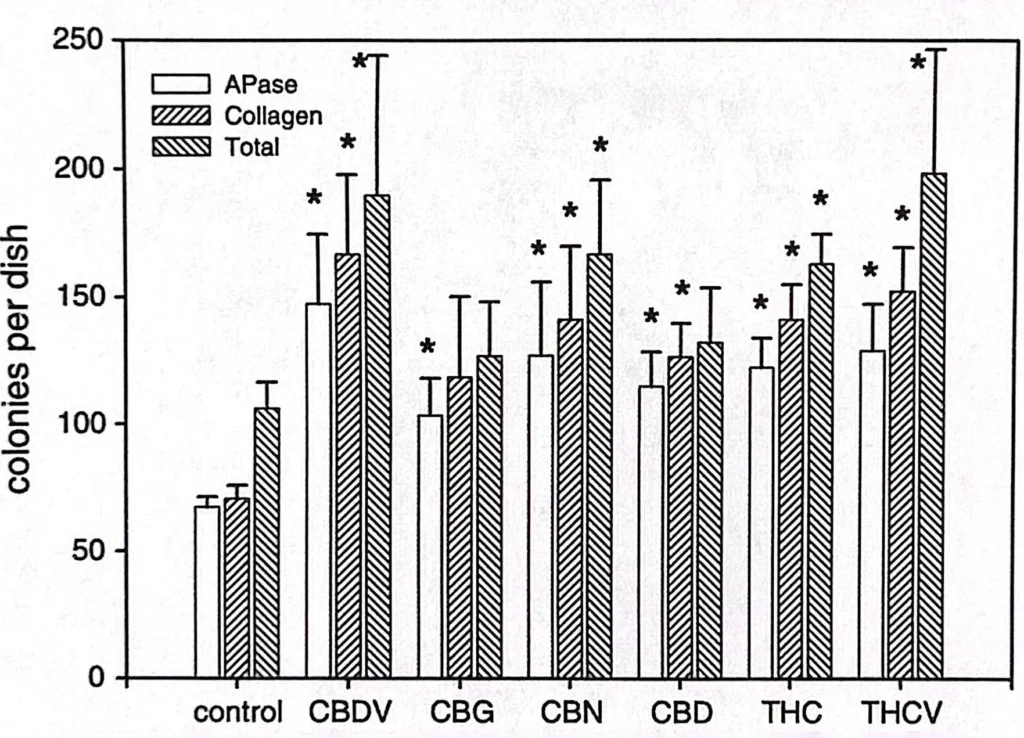
Figure 6(9). The effect of various cannabinoids on connective tissue colony formation by Bone Marrow Stem Cells in-vitro. In particular the formation of Alkaline Phosphatase (APase) enzymes due to the plasma immune system activation and Collagen.
This means that there is a potential for a significant synergistic effect of all these benefits if Cannabinoids like CBN, CBD, CBG and others are combined.
CBN as a Powerful Anti-Bacterial Agent
Recent studies suggest that CBN may have powerful antibacterial properties. It has been proven to be more powerful against dental bacteria that causes cavities, bad breath, and tooth decay, than Oral B, Colgate and other oral care products. These bacteria accumulate in the dental plaque, which is a complex biofilm that gets formed on the teeth and acts as a reservoir of different microbes. It is the root cause for the occurrence of several dental problems and diseases, including cavities, bad breath, bleeding gums, tooth decay, and tooth loss. Therefore, it should be regularly removed using suitable oral care aids(20).
A first of its kind study performed by (Stahl et. al.) in 2020 compared the efficacy of the best oral care products on the market and cannabinoids in reducing the bacterial content of dental plaques(20).
Dental plaque refers to the complex biofilm that acts as a reservoir of several microbes that can be defined as “the soft deposit that forms the biofilm adhering to the tooth surface or other hard surfaces in the oral cavity, including removable and fixed restorations”(21). Dental plaque is formed owing to the deposition of a combination of saliva, foods, and fluids on the tooth surface(21). The dental plaque formed on the tooth surface and gum line includes thousands of bacteria that convert food residues into acids, eventually leading to the initiation of dental diseases such as dental caries, gingivitis, and periodontal diseases(21). Periodontitis or gum disease is a global public health problem that affects millions of people each year and is the most common cause of tooth loss in adults(21). It is a gum infection that affects the soft and hard tissues supporting the teeth (see Figure 7)(22).
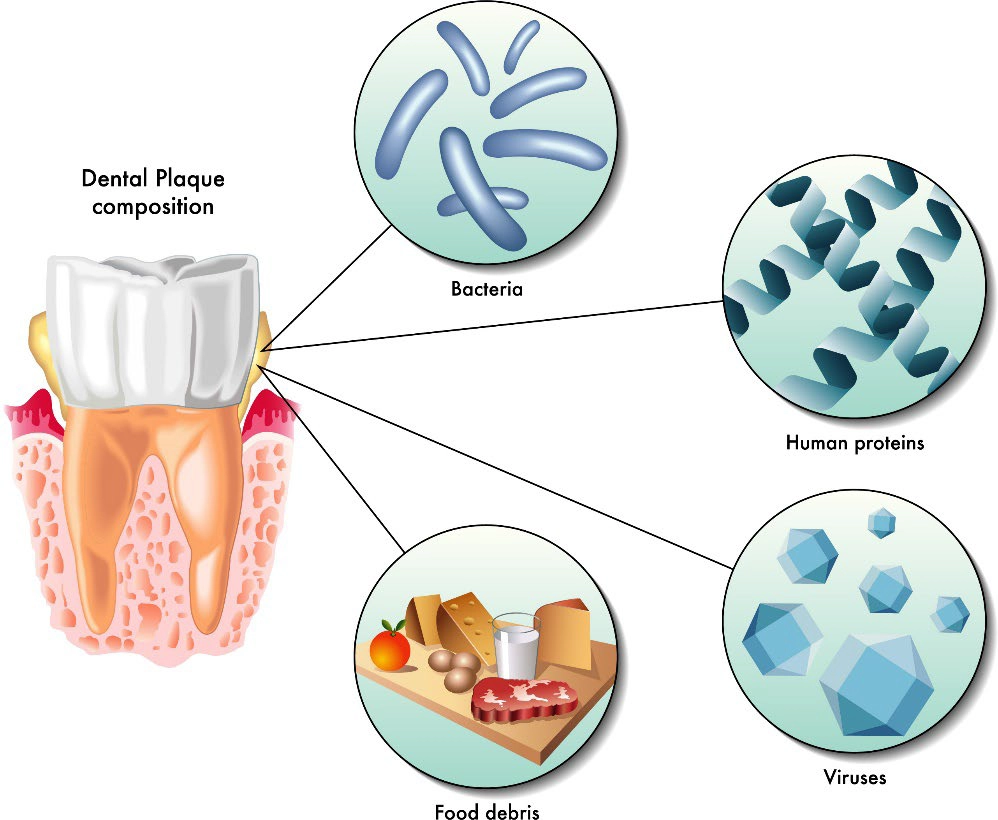
Figure 7. Representation of a dental plaque as the primary cause of gingivitis.
In the unique study by (Stahl et. al.) 60 adults aged 18 to 45 years were categorized into six groups based on the Dutch periodontal screening index. Dental plaques of the adults were collected using paro-toothpick sticks and spread on two Petri dishes, each with four divisions. On Petri dish-A, Cannabidiol(CBD), Cannabichromene (CBC), Cannabinol(CBN), and Cannabigerol(CBG) were used, and on Petri dish-B, Cannabigerolic Acid(CBGA), Oral B, Colgate, and Cannabite F (a toothpaste formulation of pomegranate and algae) were used. The Petri dishes were sealed and incubated, followed by counting the number of colonies(20). By evaluating the colony count of the dental bacteria isolated from six groups, it was found that cannabinoids were more effective in reducing the bacterial colony count in dental plaques as compared to the well-established synthetic oral care products such as Oral B and Colgate proving that Cannabinoids have the potential to be used as an effective antibacterial agent against dental plaque-associated bacteria and provides a safer alternative for synthetic antibiotics (like the golden standard Chlorhexidine Digluconate, Colgate and Oral B) to reduce the development of drug resistance (20).
The participants in the study were categorized into six groups (10 participants in each group) on the basis of Dutch periodontal screening index (DPSI) as follows: 0, perfect gum and no bleeding; 1, inflammation and bleeding of gum (gingivitis); 2, conditions of category 1 and chalk hardened dental plaque; (-3), conditions of category 2 with bone involvement (periodontitis); (+3) conditions of (-3) with recessions of gum and root exposure; and 4, conditions of category (+3) with severe bone resorption and high tooth mobility(20). See Figure 8 for results.
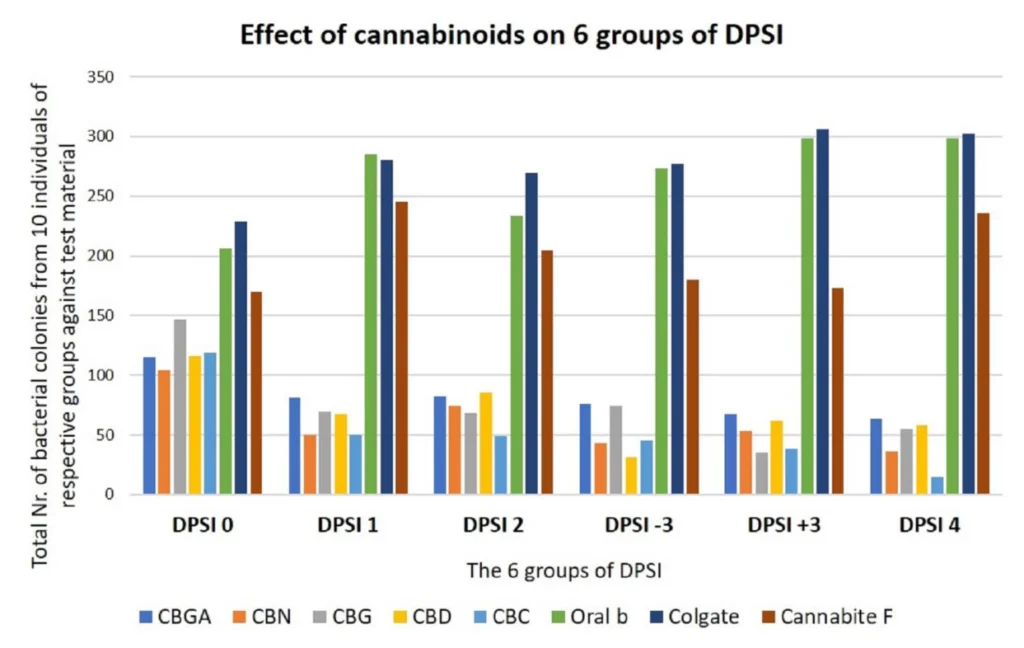
Figure 8. Comparison of six research groups with respect to bacterial colony count.
As can be seen from Figure 8 the results showed that cannabinoids were found to be more effective in reducing the colony count of the bacterial strains (gram-positive bacteria, such as Streptococcus mutans, followed by gram-negative bacteria and several other anaerobes such as Fusobacterium and Actinobacteria) as compared to the well-established synthetic oral care products such as Oral B or Colgate(20). As can also be seen, there may be a significant synergistic effect if Cannabinoids like CBN, CBD, CBC, CBG are combined.
It was also suggested that CBN, CBD, CBC, and CBG cannabinoids showed activity against a variety of Methicillin-Resistant Staphylococcus Aureus (MRSA) strains of current clinical relevance like (, however the mechanism of this powerful anti-bacterial activity is very elusive(23).
Table 1 shows the activity of CBD, CBC, CBG, and CBN against Staphylococcus Aureus strains that includes the infamous EMRSA-15 and EMRSA-16, SA-1199B a multidrug-resistant strain, a macrolide-resistant strain (RN4220), a tetaracycline-resistant strain (XU212), and a standard laboratory strain (ATCC25923). The activities were compared highly favorably with the standard antibiotics for these strains (Norfloxathin, Erythromycin, Tetracyclin, and Oxacillin)(23).
| Compound | SA-1199B | RN-4220 | XU212 | ATCC25923 | EMRSA-15 | EMRSA-16 |
| CBD | 1 | 1 | 1 | 0.5 | 1 | 1 |
| CBC | 2 | 2 | 1 | 2 | 2 | 2 |
| CBG | 1 | 1 | 1 | 1 | 2 | 1 |
| CBN | 1 | 1 | 1 | 1 | 1 | 1 |
| Norfloxathin | 32 | 1 | 4 | 1 | 0.5 | 128 |
| Erythromycin | 0.25 | 64 | >128 | 0.25 | >128 | >128 |
| Tetracyclin | 0.25 | 0.25 | 128 | 0.25 | 0.125 | 0.125 |
| Oxacillin | 0.25 | 0.25 | 128 | 0.125 | 32 | >128 |
Table 1. Minimum concentration (µg/mL) of Cannabinoids towards various Drug-Resistant strains of Staphylococcus Aureus(23).
These in-vitro studies showed that on average at 1µg/mL CBN, CBD, CBG and CBC are very effective against MRSA strains and for many strains are much more effective than the conventional anti-biotic medication currently used in the world. Moreover, a combination of these cannabinoids (especially CBN and CBD) would be even more effective due to the synergistic effect they would provide.
Studies and Research on CBN as a Sleep Aid
Currently, CBN is almost exclusively marketed as a sleep aid, but is there really scientific basis for this, or is it a myth? This question arises because it is very hard to find any credible clinical studies or research evidence that CBN helps with sleep.
The first study on the effects of CBN on humans was performed in 1975, when Δ9-THC and CBN were administered to 5 male volunteers with 1 week of rest in between doses. The doses were as follows: “placebo, 50 mg CBN, 25 mg Δ9-THC, 12.5 mg Δ9-THC + 25 mg CBN, and 25 mg Δ9-THC + 50 mg CBN (orally)(24). The study showed that CBN alone produced no change in physiological conditions(heart rate, electrocardiogram, blood pressure, or body temperature), and no change in psychological conditions(feeling of being drugged, drunk, dizzy, and drowsy). Δ9-THC by itself produced an increase in heart rate and change in psychological condition(feeling of being drugged, drunk, dizzy, and drowsy). With combined CBN+ Δ9-THC treatment, volunteers reported feeling more drugged, drunk, dizzy, and drowsy than under the Δ9-THC condition alone. None of the drug treatments produced significant changes on perception, emotion, cognition and sociability(24). So it may appear that CBN increased the effect of Δ9-THC on some aspects of physiological and psychological processes, but these effects are small and cannot account for the greater potency which has been reported when plant material is used(24).
In another study also performed in 1975(25), oral doses of Δ9-THC 20 mg, combined with placebo or with 40 mg doses of Cannabinol (CBN) and Cannabidiol (CBD), were given to volunteers. The combination of THC with CBN produced no detectable changes in the quality, intensity, or duration of the effects of THC alone. The THC-CBD combination tended to delay onset and prolong effects of THC, while making them somewhat more intense(25). Even this interactive effect was slight, providing no reason to conclude that CBN, or CBD have any effect on sleep separately, or when combined with THC.
So here we have 2 studies that directly contradicted each other. In recent years, marketers of hemp and cannabis products have claimed that Cannabinol (CBN) has unique sleep-promoting effects(26), but the early pre-clinical and clinical research investigating the effects of CBN is dated and limited, with most of human studies occurring in the 1970-1980s with small sample sizes lacking diversity in sociodemographic characteristics(26). Randomized, double-blind, placebo-controlled studies specifically assessing subjective effects associated with sleep, such as sedation or fatigue, were non-existent until August of 2023 when (Isobel Lavender et.al.) published their protocol for randomized, double-blind, placebo-controlled, cross-over, three-arm, proof-of-concept trial, which is currently in process investigating the effects of CBN on sleep and next-day function in 20 participants with clinician-diagnosed insomnia disorder and an Insomnia Severity Index Score ≥ 15. Participants receive a single fixed oral liquid dose of 30 mg CBN, 300 mg CBN and matched placebo, in random order on three treatment nights; each separated by a 2-week wash-out period. Participants undergo overnight sleep assessment using in-laboratory polysomnography and next-day neurobehavioral function tests(27). The primary outcome is wake after sleep onset minutes, secondary outcomes include changes to traditional sleep staging, sleep-onset latency and absolute spectral power during non-rapid eye movement (NREM) sleep, tertiary outcomes include changes to sleep spindles during NREM sleep, arousal indices, absolute spectral power during REM sleep and subjective sleep quality, safety-related and exploratory outcomes include changes to next-day simulated driving performance, subjective mood and drug effects, postural sway, alertness and reaction time, overnight memory consolidation, pre and post-sleep subjective and objective sleepiness; and plasma, urinary, and salivary cannabinoid concentrations(27). This first of its kind study will provide novel preliminary data on CBN efficacy and safety in insomnia disorder, which will inform larger clinical trials.
There is a plausible mechanism of action, because CBN does interact with CB1 receptors. The interaction is weak, so the “sleep” effect may be highly dose dependent, which means dosages significantly higher than those found in currently available CBN products marketed for sleep (typically ≤5 mg) are needed, but in order to know the right dose of CBN that would induce sleep, we need to know how much less psychoactive CBN is than Δ9-THC.
Evidence of psychoactive effect in humans suggests reduced potency relative to Δ9-THC and very poor oral bioavailability of CBN. For example, Hollister (1973) administered oral CBN (20–400 mg) to males without any “characteristic mental or physical effects of THC”, similarly, Karniol et al. (1975) reported no THC-like effects with oral CBN (50 mg) in males, however, CBN (IV, 194 μg/kg) produced Cannabis-like effects that were reported to be mild and enjoyable in males with substantially (~10-fold less) less potency than Δ9-THC (Perez-Reyes et al., 1973)(28). However (Ethan Russo et al., 2017) found that relative to THC, CBN maintains about ¼ the potency(29), but sadly only measurable after intravenous administration(30).
Based on the currently available clinical and research studies on CBN and sleep, we can conclude that the bioavailability of CBN isolate/oil is very low and to have a positive effect on sleep without ingesting grams of CBN isolate, its bioavailability will need to increase significantly. The best way to achieve that is through creation of stable oil-in-water liquid emulsion of CBN in water through nano-emulsification “Water Soluble CBN”.
Best Water-Soluble Cannabinoid Maker on the Market
Mile High Labs develops the best Water Soluble Cannabinoids on the market, which includes water soluble powders and liquids of CBD, CBG, CBN and soon CBC isolates and distillates. Here are the advantages of using MHL water soluble liquids:
- MHL Water Soluble Cannabinoids (powders and liquids) contain 20% active loading of Cannabinoids(CBD, CBG, CBN). Which means every mL of MHL liquid emulsion contains 200mg of the specific Cannabinoid v.s. the competition that only contains at most 5%-10% loading. This means that one would have to add 2-4 times less of MHL water soluble liquid than the competition and consequently the price of this ingredient would be greatly reduced if MHL products are used.
- MHL Water Soluble Cannabinoids have 24 month physical, microbiological, and chemical stability, which means the emulsion does not separate and the Cannabinoids don’t degrade if kept at room temperature for 24 months. The competition can only claim at most 12 months stability.
- MHL Water Soluble Cannabinoids only use natural ingredients including emulsifiers. Competitive products on the market use synthetic Polysorbates and other polymers that could be harmful if used at large amounts.
- MHL Water Soluble Cannabinoid emulsions are made up of micelles with the d(50) diameter of 250nm with the particle size distribution from >100nm to 350nm. So they are allowed to be used as ingredients in UK and EU because the smallest micelles have a diameter of >100nm, but the largest micelles have sizes not so large that it introduces instability and low bioavailability. The micelle size distribution is carefully optimized to maximize Cannabinoid bioavailability and minimize their bitter taste, while keeping the emulsion stable for 24 months at room temperature.
Competitive products on the market either are nano-emulsions with droplet sizes of <100nm, which are not allowed to be sold and used in UK and EU, or have droplet sizes upwards of 500nm-600nm, which impacts the bioavailability of the Cannabinoids.
Conclusion
This comprehensive review of the currently proven and disproven CBN benefits discusses hoe CBN interacts with the human endocannabinoid system (CB1 and CB2 receptors), the existing evidence of CBN and CBD combination as an effective help for pain relief, evidence of CBN helping with osteoporosis due to it’s activity in bone growing and collagen production, evidence of CBN as a very effective anti-bacterial agent including infamous strains of MRSA and bacterial in the dental plaque, as well as a discussion on CBN as a sleep aid, which is currently very controversial in that currently it is globally marketed and accepted as a sleep aid, but due to its very low bioavailability and very low activity the current data only supports it as a sleep aid after IV injection and not oral intake. Furthermore, a claim that currently the most marketed dose of 5mg is effective as a sleep aid is unsubstantiated . To increase the bioavailability of CBN to the point where it is effective at low doses, one must consider the Water Soluble Liquid of CBN. This oil-in-water emulsion based delivery system would deliver considerably more CBN into the blood circulation and all the above benefits of CBN reviewed may be amplified.
References
- Shenglong Zou and Ujendra Kumar “Cannabinoid Receptors and the Endocannabinoid System: Signaling and Function in the Central Nervous System” International Journal of Molecular Science, 2018 Mar; 19(3): 833
- Bihua Bie, Jiang Wu, Joseph F. Foss, and Mohamed Naguib “An overview of the cannabinoid type 2 (CB2) receptor system and its therapeutic potential”. Current Opinions in Anesthesiology 2018 Aug; 31(4): 407–414
- “Cannabinoid Signaling: Insights to Future Pharmacotherapeutic Development” Cayman Chemical Article from 2020-09-03
- Hayes Wong, Brian E. Cairns “Cannabidiol, cannabinol and their combinations act as peripheral analgesics in a rat model of myofascial pain”. Archives of Oral Biology, 104 (2019) 33-39
- Pertwee, R. G. (2008) The diverse CB1 and CB2 receptor pharmacology of three plant cannabinoids: delta9-tetrahydrocannabinol, cannabidiol and delta9-tetrahydrocannabivarin. British Journal of Pharmacology, 153, 199–215
- Amar, B. (2006). “Cannabinoids in medicine: A review of their therapeutic potential”. Journal of Ethnopharmacology, 105, 1–25
- Izzo, A. A., Borrelli, F., Capasso, R., Di Marzo, V., & Mechoulam, R. (2009). “Non-psychotropic plant cannabinoids: New therapeutic opportunities from an ancient herb”. Trends in Pharmacological Sciences, 30, 515–527
- Pertwee, R. G. (2005). “Pharmacological actions of cannabinoids”. Handbook of Experimental Pharmacology, 1–51
- A. Scutt, E. M. Williamson “Cannabinoids Stimulate Fibroblastic Colony Formation by Bone Marrow Cells Indirectly via CB2 Receptors” Calcified Tissue International (2007) 80:5059
- Bab I, Ofek O, Karsak M, Fogel M, Wright K, AttarNamdar M, Shohami E, Zimmer K, Mechoulam R (2004) “Cannabinoid CB2 receptor and human osteoporosis”. 14th Annual Symposium, International Cannabinoid Research Society, Paestum, Italy, p P74, 22-24 June 2004
- Idris AI, van ’t Hof RJ, Greig IR, Ridge SA, Baker D, Ross RA, Ralston SH (2005) “Regulation of bone mass, bone loss and osteoclast activity by cannabinoid receptors”. Nat Med 11:774-779
- Karsak M, Cohen-Solal M, Freudenberg J, Ostertag A, Morieux C, Kornak U, Essig J, et al. “Cannabinoid receptor type 2 gene is associated with human osteoporosis. Hum Mol Genet 14:3389-3396
- Toma C, Pittenger MF, Cahill KS, Byrne BJ, Kessler PD “Human mesenchymal stem cells differentiate to a cardiomyocyte phenotype in the adult murine heart”. Circulation 105:93-98
- Wakitani S, Saito T, Caplan AI (1995) “Myogenic cells derived from rat bone marrow mesenchymal stem cells exposed to 5-azacytidine”. Muscle Nerve 18:1417-1426
- Munoz-Elias G, Woodbury D, Black IB (2003) “Marrow stromal cells, mitosis, and neuronal differentiation: stem cell and precursor functions”. Stem Cells 21:437-448
- Ferrari G, Cusella-De Angelis G, Coletta M, Paolucci E, Stornaiuolo A, Cossu G, Mavilio F “Muscle regeneration by bone marrow-derived myogenic progenitors”. Science 279:1528-1530
- Devine MJ, Mierisch CM, Jang E, Anderson PC, Balian G (2002) “Transplanted bone marrow cells localize to fracture callus in a mouse model”. J Orthop Res 20:1232-1239
- T L Feldbush 1, D Lafrenz “Alkaline phosphatase on activated B cells characterization of the expression of alkaline phosphatase on activated B cells. Kinetics and membrane anchor” Journal of Immunology. 1991 Dec 1;147(11):3690-5
- Sarah A. Althwaiqeb; Bruno Bordoni “Histology, B Cell Lymphocyte”, StatPearls, May 29, 2023
- Veronica Stahl, Kumar Vasudevan (January 29, 2020) “Comparison of Efficacy of Cannabinoids versus Commercial Oral Care Products in Reducing Bacterial Content from Dental Plaque: A Preliminary Observation”. A Preliminary Observation. Cureus 12(1): e6809
- Schwach-Abdellaoui K, Vivien-Castioni N, Gurny R “Local delivery of antimicrobial agents for the treatment of periodontal diseases”. European Journal of Pharmacology and Biopharmacology 2000, 50:83-99
- “What is Gum (Periodontal) Disease?” The Oral Health Specialists
- Giovanni Appendino et. al. “Antibacterial Cannabinoids from Cannabis satiWa: A Structure-Activity Study” Journal of Natural Products 2008, 71, 1427–1430
- I.G. Karniol, I. Shirakawa, R.N. Takahashi, E. Knobel, R.E. Musty “Effects of delta9-tetrahydrocannabinol and cannabinol in man” Pharmacology, 1975;13(6):502-12
- L E Hollister, H Gillespie “Interactions in man of delta-9-tetrahydrocannabinol. II. Cannabinol and cannabidiol” Clinical Pharmacology Ther. 1975 Jul;18(1):80-3
- Jamie Corroon “Cannabinol and Sleep: Separating Fact from Fiction” Cannabis Cannabinoid Res. 2021 Oct;6(5):366-371
- Isobel Lavender et.al. “Cannabinol (CBN; 30 and 300 mg) effects on sleep and next-day function in insomnia disorder (‘CUPID’ study): protocol for a randomised, double-blind, placebo-controlled, cross-over, three-arm, proof-of-concept trial”. BMJ Open. 2023; 13(8): e071148
- Jason Wallach “Medicinal Cannabis: an overview for health-care providers” 5.13 Cannabinol, Remington (Twenty-third Edition), 2021
- Ethan B. Russo, Jahan Marcu “Cannabinoid Pharmacology”, Advances in Pharmacology, 2017
- Arno Hazekamp et al., wt Development & Modification of Bioactivity, Comprehensive Natural Products II, 2010
Reviewed By:
Vardan Ter-Antonyan
Manager, R&D Formulations
Research & Development
Comprehensive Review of Cannabigerol (CBG)
Pharmacokinetics and Mechanisms of Action Against Gastrointestinal Inflammation, Anxiety, Nausea, (CNS) Cell Damage and Others
This is a comprehensive review of existing scientific work on a non-psychoactive cannabinoid “Cannabigerol”, its pharmacokinetics and pharmacodynamics as well as its mechanisms of action inside the human Endocannabinoid cell signaling system. As it is shown, CBG can inhibit pain signal propagation in the body, inhibit inflammatory response in the immune system, act as a neuroprotector of the central nervous system cells and have a powerful anti-anxiety effect(1), as well as other effects such as anti-bacterial against (MRSA)(2), Streptococcus Mutans, and other anti-biotic resistant bacterial strains by reducing membrane fluidity and causing a consequent increase in membrane permeability(3). Other experiments have demonstrated that CBG is a potential agent against skin conditions like acne, skin inflammation and psoriasis(1), bacterial biofilm (a key factor for contamination of medical devices) favoring the raising of human chronic infections(4).
Cannabigerol (CBG) and its Interaction with Endocannabinoid Cell Signaling System
Cannabigerol (CBG) in it’s acid form (CBGA) is called the “Mother Cannabinoid” because it’s the first cannabinoid that occurs in the cannabis plant, along with various enzymes and other compounds. Synthase reactions between CBGA and enzymes give birth to CBDA, THCA and CBCA. After the cannabis plants are harvested and decarboxylated, the acid forms of these three major phyto-cannabinoids convert into their base forms (CBC, CBD, and Δ9-THC), which are considered more active than their acid forms (Figure 1). During this process, CBG is depleted and found in smaller amounts in the plant post-extraction compared to its original levels. Therefore, to extract a significant amount of CBGA, a specific hemp strain with a high CBGA content is required (See Figure 1 for CBG and CBGA molecules).

Figure 1. Chemical structure of CBG (left) and CBGA (right)
In the presence of inflammatory stimuli in the body, cells of the central nervous system biosynthesize endocannabinoid anandamide (AEA), which is a lipid mediator synthesized ‘on demand’ from cell membrane phospholipids. Once synthesized, AEA activates CB1 and CB2 cannabinoid receptors to elicit a biological response of Dopamine release (see Figure2), after which AEA endocannabinoids are inactivated through re-uptake facilitated by enzymatic degradation by N-acyl ethanolamine-hydrolysing acid amidase (NAAA) and fatty acid amide hydrolase (FAAH) enzymes(5). The CB1 and CB2 cannabinoid receptors are part of the endocannabinoid signaling system which also includes the enzymes that synthesize and degrade endocannabinoids, as well as possible transporters. The molecular mechanisms for regulating lipid-based signaling events such as cannabinoid receptor signaling are not yet completely understood, although significant progress has been made(6,7). Activation of CB1 and CB2 receptors results in some natural inflammatory stimulus suppression(8), but the amplitude and duration of that suppression is regulated by how fast they are broken down, so this anti-nociceptive effect is weak and short-lived (only about 4-5 minutes in vivo)(9). It has been demonstrated that Cannabigerol (CBG) causes inhibition of the reuptake/downregulation/metabolism/degradation of AEA as a result of activation and desensitization of TRPA1, TRPV1, and TRPV2 cellular channels, while also deactivating TRPM8 cellular channel(1). This leads to CB1 and CB2 receptors remaining active for a much longer time, and a longer pain relief(11).
CBG also blocks the voltage-gated sodium channels (Nav 1.1, 1.2, and 1.5) and can reduce the psychotropic effect of THC(12). Both CBG and AEA possess anti-inflammatory activity through a not sufficiently clarified mechanism of action(1).

Figure 2. The endocannabinoid system – consisting of the endocannabinoids and the cannabinoid receptors – regulates nerve cell communication at the synapse, thereby playing a role in a variety of bodily functions. Activation of Dopamine receptors “D2” triggers release if Anandamide (AEA) endocannabinoid, leading to release of Dopamine(10).
COX-mediated anti-inflammatory activity of CBG and CBGA have been studied and both showed inhibition of the enzyme COX-1 and COX-2 activity by > 30% (13).
Analysis of Some of the Existing Evidence of GI Anti-Inflammatory and Antioxidant Effects of Cannabigerol(CBG)
Inflammatory bowel disease (IBD) is an incurable disease, which affects 200 per 100,000 adults in the United States and 400 per 100,000 in the United Kingdom(15). Major subtypes consist of Crohn’s disease and ulcerative colitis(15). A definitive clinical treatment for these chronic relapsing diseases remains elusive, as currently no therapy exists to reverse the clinical pathology without a risk of significant side effects(15). Corticosteroids, 5-ASA agents, anti-TNFα antibodies, and other immunomodulatory drugs have all been shown to induce significant remission in IBD, but are associated with bone marrow suppression, opportunistic infection, infusion reactions, and malignancy secondary to immunosuppression(15). Hence, it is required to develop new approaches with fewer side effects for the treatment of IBD(16).
Anti-inflammatory and anti-oxidant activities were investigated mainly through pre-clinical research. In laboratory investigations, CBG has been shown to have anti-inflammatory effects, and a subgroup analysis suggested that in experimental colitis CBG caused the largest reduction in inflammation among other well known cannabinoids tested(15). Presented below is a review of the investigation of the effect of CBG on Ulcerative Colitis (UC), which is characterized by abdominal pain, diarrhea, bleeding and malabsorption(16). Inflammation was assessed by evaluating inflammatory markers/parameters (colon weight/colon length ratio and myeloperoxidase activity), by histological analysis and immunohistochemistry; interleukin-1b, interleukin-10 and interferon-g levels by ELISA, inducible nitric oxide synthase (iNOS) and cyclooxygenase-2 (COX-2) by western blot and RT-PCR; CuZn-superoxide dismutase (SOD) activity by a colorimetric assay(16).
IBD causes a significant increase in colon weight/colon length ratio, a simple and reliable marker of intestinal inflammation/damage and a significant decrease in colon weight/length ratio was achieved after administration of CBG in the concentration range of (1mg/kg – 30mg/kg) in a dose dependent manner (See Figure 3)(16). To confirm the anti-inflammatory activity of CBG we performed histological analysis of Control, IBS and 30mg/kg CBG treated colons (Figure 4)(16). The curative action of CBG was further confirmed by Intestinal Permeability study. FITC-conjugated dextran presence was not detected in the serum of healthy control animals, which is suggestive of intestinal membrane integrity (Fig. 5A). Serum of IBS subjects contained significant FITC-conjugated dextran, indicating disruption of intestinal membrane integrity (Fig. 5A). CBG treatment (30 mg/kg) completely abolished increased intestinal permeability (Fig. 5A)(16).

Figure 3. Colon weight/length ratio (mg/cm) of colons from normal (Control) and IBS in the presence or absence of (1-30mg/kg) of CBG (16).

Figure 4. Histological evaluations of inflamed and non-inflamed colons: effect of CBG). No histological modification was observed in the mucosa and submucosa of Control colon (A); IBS colon (B); treatment with 30mg/ml CBG reduced colon injury by stimulating regeneration of the glands (C (16).

Figure 5. Effect of CBG on intestinal permeability (evaluated as FITC-dextran permeability), myeloperoxidase (MPO, a marker of intestinal inflammation) activity (B) and superoxide dismutase (SOD) activity (C) (16).
MPO activity is considered to be an index of neutrophil infiltration (because MPO is predominantly found in these cells) and it is largely used to quantify intestinal inflammation(16). Colitis was associated with significantly increased neutrophil infiltration, as evaluated by MPO (Fig. 5B)(16). CBG, given after the inflammatory insult at the dose of 30 mg/kg, counteracted increase in MPO activity (Fig. 5B), hence decreased inflammation(16). Colitis also produced a significant decrease in Superoxide Dismutase (SOD) activity (Fig. 5C), while CBG, at the dose of 30 mg/kg counteracted the reduction (Fig. 5C)(16).
IBS also causes significant production of Reactive Oxygen Species (ROS) in the intestinal epithelial cells, but a pre-treatment for 24 h with CBG (0.1–10 mM) reduced ROS formation as measured by the inhibition of DCF fluorescence intensity(16). The effect was significant starting at the concentration of 1 mM (Fig.6), and CBG (up to 10 mM) had no significant cytotoxic effect on colonic epithelial cells after a 24-h exposure.
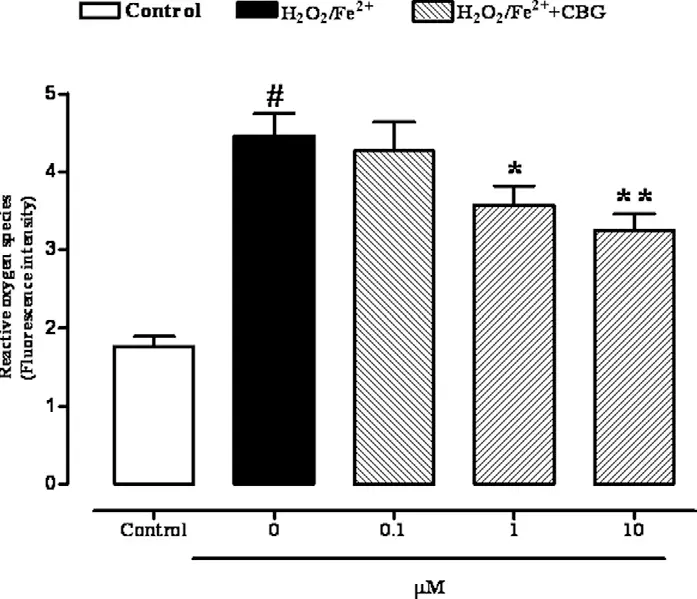
Figure 6. Reactive oxygen species (ROS) production produced by Fenton’s reagent (2 mM H2O2/Fe2+) in Ptk6 null colonic epithelial cells after 24-h exposure to cannabigerol (0.1–10 mM). Results are mean ± SEM of five experiments. #p < 0.001 vs control, *p < 0.05 and **p < 0.01 vs H2O2/Fe2+alone(16).
Discussion
The studies have found that CBG reduced colon weight/colon length ratio of the inflamed colonic tissue, which is considered a reliable and sensitive indicator of the severity and extent of the inflammatory response. CBG was effective when given both before and after the inflammatory insult, suggesting a preventive and a curative (therapeutic) beneficial effect. Significant protective effects were achieved starting from the 1 mg/kg dose (preventive dose) and 5 mg/kg (therapeutic dose). Maximal efficacy was achieved with the 1 mg/kg dose and the30mg/kg dose in the preventative and therapeutic cases respectively. Histological examination showed that CBG 30 mg/kg reduced the signs of colon injury; specifically, in the colon of CBG-treated animals, the glands were regenerating, the oedema in submucosa was reduced and the infiltration of granulocytes into the mucosa and submucosa was decreased. The therapeutic effect of CBG was further demonstrated by its capacity to reverse the increase in intestinal permeability and restored the integrity of intestinal epithelium.
Finally, the evidence shows a possibility that CBG could protect the intestinal mucosa by reducing oxidative stress. SOD activity measurement showed an important antioxidant defense in the gut by eliminating ROS production, a major tissue-destructive force which contributes significantly to the pathogenesis of IBD. These results suggest that the therapeutic effect of CBG could be due, at least in part, to its antioxidant action.
It has been found that by interacting with a CB2 receptor CBG increases cellular antioxidant defense by modulating Superoxide Dismutase (SOD-1) expression, thus inhibiting cell death(17). This indicates that CBG could be useful as a new approach in the care of oxidative stress-related disorders. CBG may effectively work as a free radical scavenger to enhance cellular antioxidant activity through the modulation of pathways such as MAPK kinase and NF-κB translocation and to counteract cell death.
Neuroprotective Effects of CBG
Neuroprotective effects of CBG and CBD have been compared in experiments simulating oxidative stress and neurotoxicity by exposing the assaulted hypothalamic cells to either 1000nM CBD or 1nM CBG, and their influence on the synthesis and release of dopamine (DA), norepinephrine (NE), and serotonin (5-HT) was evaluated, as well as the 3-hydroxykinurenine/kinurenic acid (3-HK/KA) ratio was also determined(18).
3-hydroxykynurenine (3HK) is a metabolite of tryptophan that exhibits cytotoxicity through mechanisms that culminate in apoptosis, or cell death(19). Conversely Kinurenic Acid (KA) is an important bio-active product of tryptophan metabolism, which exhibits well-known neuroprotective effects on mental health disorders(20). So the larger the (3-HK/KA) ratio the larger is neurotoxicity, and vice versa.
To better evaluate the effect of CBD and CBG on the Hypo-E22 hypothalamic cells in their basal state, the detection of the extracellular release of 3-HK and KA was performed by (di Giacomo, Viviana et al.)(18). The ratio 3-HK/KA, a well-known index of neurotoxicity, was considerably reduced following CBD and CBG treatment (Figure 7)(18).

Figure 7. Inhibitory effects induced by 1000nM CBD and 1nM CBG on extracellular 3-hydroxykinurenine/kynurenic acid (3-HK/KA) ratio in hypothalamic Hypo-E22 cells. ANOVA, p<0.001; ** p<0.01, * p<0.05 vs. control group(18).
In parallel, a significant inhibition (p < 0.0001) of Norepinephrine (NE) steady state level was observed when the hypothalami were exposed both to CBD and CBG(18) (Figure 8).

Figure 8. Effects of 1000nM CBD and 1nM CBG on norepinephrine (NE) levels (ng/mg wet tissue) in isolated rat hypothalamus. CBD and CBG inhibited NE levels.
Norepinephrine, or Noradrenalin is a naturally occurring chemical in the body that acts as both a hormone and neurotransmitter (a substance that sends signals between nerve cells), according to the Endocrine Society(21). Stress triggers the release of norepinephrine and adrenaline, which is known as the fight-or-flight response, the body’s emergency response to danger or perceived danger, which causes several changes in the body, including: pupil dilation, pale skin, high blood pressure, rapid irregular heartbeat, excessive sweating, severe headache, nervous feeling and jitters, deeper and faster breathing, burst of energy, burst of blood and oxygen in the muscles according to Cleveland Clinic. However too little norepinephrine can result in: anxiety, depression, attention deficit hyperactivity disorder (ADHD), headaches, memory problems, sleeping problems, low blood pressure (hypotension), low blood sugar (hypoglycemia), changes in blood pressure and heart rate, dopamine beta-hydroxylase deficiency, which is why the noradrenaline level must be carefully regulated and stabilized according to Cleveland Clinic.
Discussion
The protective effects exerted by CBD and CBG on hypothalamic cells challenged with Hydrogen Peroxide (H2O2), as demonstrated by the assay results presented above, are confirmed by the modulation of the release of kynurenine metabolites by the same cells. The 3-HK and KA are key products of the kynurenine pathway, which represents the two main tryptophan degradative systems(22). Additionally, tissue and plasma levels of these two molecules are well known to be related to inflammatory and oxidative stress conditions in both peripheral and central tissues (23,24,25). Specifically, the 3-HK/KA is a reliable marker of neurotoxicity(26), and the findings of reduction of this ratio from Hypo-E22 cells after pharmacological treatment further support the neuroprotective role exerted by both CBD and CBG(18). The CBD modulates hypothalamic neuromodulators, whereas the CBG effect on the same mediators suggests alternative mechanisms, possibly involving peripheral pathways, which is why a combination of CBG and CBD may dose dependently amplify the neuroprotective effects achieved by CBD, or CBG individually.
Anti-Anxiety Effects of CBG
Endocannabinoids have been shown to modulate emotional behaviors(27,28). CBG acts as a serotonin antagonist as demonstrated in in-vitro(29) and in-vivo experiments(30). It is also clearly established (via double-blind placebo-controlled studies)(32) that serotonin receptor agonists have anxiolytic and ant depressive properties, which is why it has been proposed that it can be responsible for the anti-anxiety effects of hemp and cannabis(31).
In other experiments, it has been observed that i.p. CBG administration (intraperitoneal injection) at a dose of 10 mg/kg in mice enhanced the period of time consumed in the central quadrant of the open field test, thus suggesting potential anxiolytic effects. In the same group of experiments, i.p. CBG administration at a dose of 3 mg/kg also produced a light anti-nociceptive effect(33).
Anti Acne, Skin Inflammation and Psoriasis Effects of CBG
The effects of CBG on the expression of keratins, and DNA methylation of keratin 10 gene, have been studied in the human keratinocytes (HaCaT) cellular line, together with DNA methylation and expression of four DNA methyltransferases (DNMT1, 3a, 3b, and 3L). These experiments showed that CBG caused a significant reduction in the expression of the genes investigated by increasing the DNA methylation of the gene for keratin 10. The data obtained from these experiments led the authors to believe that CBG behaves as a transcriptional suppressor, able to control cell proliferation and cell differentiation, being a substance potentially useful for new therapeutic approaches for skin disorders(34).
The effects of CBD, CBG and CBDV were tested in proliferating and differentiated HaCaT cells, and were compared to those of the Endocannabinoid (AEA) as a control(37,38). In a preliminary set of dose-response experiments on K10 gene expression levels (Figure 9), the lowest effective dose of CBD (p < 0.001) and CBG (p < 0.05) was found to be 0.5 µM, whereas CBDV was ineffective up to 1.0 µM, previously found to be the lowest effective dose of AEA(38).

Figure 9. Expression of K10 gene in HaCaT cells. Keratinocytes were induced to differentiate by treatment with TPA plus calcium for 5 days. Differentiated HaCaT cells were treated with 1 μM AEA and different amounts (0.1 – 0.5 – 1.0 μM) of CBD, CBG and CBDV. K10 was detected by quantitative RT-PCR. For the quantitation of gene expression, β-actin was used as housekeeping gene. The results are shown as fold induction over proliferating cells of three independent experiments. Prol, proliferating cells; Ctrl, differentiated cells. ***, p<0.001 vs Prol; ###, p<0.001 vs Ctrl; ##, p<0.01 vs Ctrl; #, p<0.05 vs Ctrl.
By using qRT-PCR analysis, significant reduction of the expression of K10 and TGase5 genes was achieved upon treatment of differentiated HaCaT cells with 0.5 µM CBD (p < 0.001) or CBG (p < 0.05 for K10; p <1 0.001 for TGase5)(34).
On this basis, CBG has been studied as a possible anti-acne drug. Acne is a common skin pathology; however, its more serious expression can deeply weaken the quality of life and, because of social censure, can produce consequent psychological disturbance(35). CBG (10–20 mM) treatment for 24 h significantly reduced lipogenesis stimulated by AEA. These results suggest the possibility that CBG may act as a partial agonist through the same pro-lipogenic signaling pathway on which AEA is active. CBG was also found to suppress inflammation caused by LPS on sebocytes. The results of the above-exposed experiments according to the antiproliferative action of CBG, increase the hypothesis that these compounds may be useful in acne and in other skin pathologies associated with inflammatory characteristics, such as psoriasis(36).
Conclusion
The study of CBG pharmacology shows that this compound shares some characteristics with other phytocannabinoids, but it displays its own characteristic profile, as shown by emerging research(1). Pharmacodynamic research suggests a mechanism of action involving only partial activity of classical cannabinoid receptors, indicating that CBG, as well as CBD, has a multitarget pharmacological action and interacts with a number of endocannabinoid and non-endocannabinoid targets(1). Research, both in vivo and in vitro, shows several pharmacological effects of CBG, such as a dermatological, anti-inflammatory, antioxidant, and anti-anxiety activities. CBG synthetic analogs have been tested with positive effects, particularly in the field of neuroprotection(1). (Figure 10) shows interaction of a synthetic CBG analog with the Endocannabinoid System(1). Promising results obtained with CBG, together with the apparent lack of psychotomimetic THC-like effects, suggest that research on CBG deserves to be deepened as it could be used, alone or in association, for novel therapeutic approaches for several disorders, however, these effects have been proven only through preclinical experiments, and clinical research is needed to confirm these potential activities in humans(1).
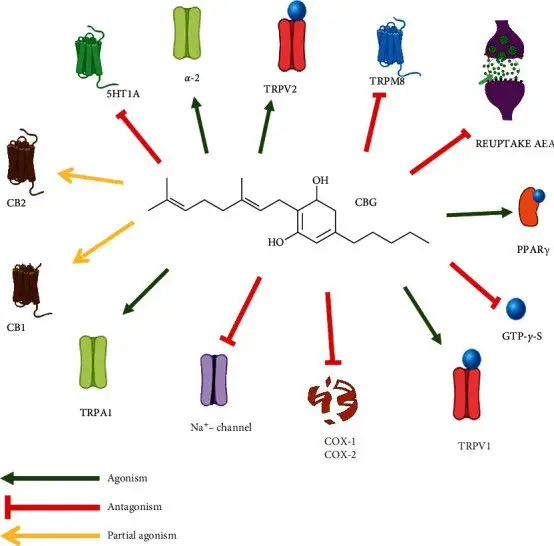
Figure 10. Interaction of a synthetic CBG analog with the Endocannabinoid System.
References
Paradisi A, Pasquariello N, Barcaroli D, Maccarrone M (2008) “Anandamide regulates keratinocyte differentiation by inducing DNA methylation in a CB1 receptor-dependent manner.” Journal of Biological Chemistry 283: 6005-12.
Fabrizio Calapai, et al. “Pharmacological Aspects and Biological Effects of Cannabigerol and Its Synthetic Derivatives” Evidence Based Complementary Alternative Medicine 2022; 2022: 3336516.
Appendino G., Gibbons S., Giana A., et al. “Antibacterial cannabinoids from Cannabis sativa: a structure-activity study.” Journal of Natural Products . 2008;71(8):1427–1430.
Aqawi M., Sionov R. V., Gallily R., Friedman M., Steinberg D. “Anti-bacterial properties of cannabigerol toward Streptococcus mutans.” Frontiers in Microbiology . 2021;12 doi: 10.3389/fmicb.2021.656471.656471.
Aqawi M., Gallily R., Sionov R. V., Zaks B., Friedman M. Steinberg D. “Cannabigerol prevents quorum sensing and biofilm formation of Vibrio harveyi.”Frontiers in Microbiology . 2020;11:p. 858. doi: 10.3389/fmicb.2020.00858.
Pertwee RG. “Emerging strategies for exploiting cannabinoid receptor agonists as medicines”. British Journal of Pharmacology 2009;156:397–411.
Patricia H. Reggio “Endocannabinoid Binding to the Cannabinoid Receptors: What Is Known and What Remains Unknown”. Curr Med Chem. 2010; 17(14): 1468–1486.
Katona L, Freund TF. “Endocannabinoid signaling as a synaptic circuit breaker in neurological disease”. Nat. Med. 2008;14:923–930.
Adarsh Thomas Anthony, Shermeen Rahmat, Prerna Sangle, et.al. “Cannabinoid Receptors and Their Relationship With Chronic Pain: A Narrative Review”, Cureus. 2020 Sep; 12(9): e10436.
Jason Socrates Bardi “Turning Off Pain’s Pathways”, The Scripps Research Institute Journal, Volume 1, Issue 22, August 13, 2001.
David W. Self “Anandamide: a candidate neurotransmitter heads for the big leagues” Nature Neuroscience volume 2, pages303–304 (1999).
Sabatino Maione, Fabiana Piscitelli, Luisa Gatta, Daniela Vita, et. al. “Non-psychoactive cannabinoids modulate the descending pathway of antinociception in anesthetized rats through several mechanisms of action”, British Journal of Pharmacology.
Hill A. J., Jones N. A., Smith I., et al. “Voltage-gated sodium (NaV) channel blockade by plant cannabinoids does not confer anticonvulsant effects per se.” Neuroscience Letters . 2014;566:269–274.
Ruhaak L. R., Felth J., Karlsson P. C., Rafter J. J., Verpoorte R., Bohlin L. “Evaluation of the cyclooxygenase inhibiting effects of six major cannabinoids isolated from Cannabis sativa.” Biological and Pharmaceutical Bulletin . 2011;34(5):774–778.
Alhamoruni A., Wright K. L., Larvin M., O’Sullivan S. E. “Cannabinoids mediate opposing effects on inflammation-induced intestinal permeability.” British Journal of Pharmacology . 2012;165(8):2598–2610.
Couch D. G., Maudslay H., Doleman B., Lund J. N., O’Sullivan S. E. “The use of cannabinoids in colitis: a systematic review and meta-analysis. Inflammatory Bowel Diseases”, 2018;24(4):680–697.
Francesca Borrelli et al. “Beneficial effect of the non-psychotropic plant cannabinoid cannabigerol on experimental inflammatory bowel disease”, Biochemical Pharmacology Volume 85, Issue 9, 1 May 2013, Pages 1306-1316.
Giacoppo S., Gugliandolo A., Trubiani O., et al. “Cannabinoid CB2 receptors are involved in the protection of RAW264.7 macrophages against the oxidative stress: an in vitro study” European Journal of Histochemistry . 2017;61(1):p. 2749.
Viviana di Giacomo et al. “Neuroprotective and Neuromodulatory Effects Induced by Cannabidiol and Cannabigerol in Rat Hypo-E22 cells and Isolated Hypothalamus” Antioxidants, 9(1), 71, 13 January 2020.
K Wilson, M Auer, M Binnie, et al. “Overexpression of human kynurenine-3-monooxygenase protects against 3-hydroxykynurenine-mediated apoptosis through bidirectional nonlinear feedback” Cell Death Dis. 2016 Apr; 7(4): e2197.
Delong Zhen, Junjun Liu, Xu Dong Zhang, and Zehua Song “Kynurenic Acid Acts as a Signaling Molecule Regulating Energy Expenditure and Is Closely Associated With Metabolic Diseases” Front Endocrinol (Lausanne). 2022; 13: 847611.
Cathy Cassata, Allison Young “What is Norepinephrine?” American College of Lifestyle Medicine, February 13, 2023.
Dolivo, D.M.; Larson, S.A.; Dominko, T. “Tryptophan metabolites kynurenine and serotonin regulate fibroblast activation and fibrosis.” Cell. Mol. Life Sci. 2018, 75, 3663–3681.
Lin, H.M.; Barnett, M.P.; Roy, N.C.; Joyce, N.I.; Zhu, S.; Armstrong, K.; Helsby, N.A.; et al. “Metabolomic analysis identifies inflammatory and noninflammatory metabolic effects of genetic modification in a mouse model of Crohn’s disease. “ Journal of Proteome Res. 2010, 9, 1965–1975.
Marciniak, S.; Wnorowski, et al., “Kynurenic Acid Protects against Thioacetamide-Induced Liver Injury in Rats.” Anal. Cell. Pathol. 2018, 2018, 1270483.
Zheng, X.; Hu, M.; Zang, X.; Fan, et al. “Kynurenic acid/GPR35 axis restricts NLRP3 inflammasome activation and exacerbates colitis in mice with social stress.” Brain Behav. Immun. 2019, 79, 244–255.
Parrott, J.M.; Redus, L.; O’Connor, J.C. “Kynurenine metabolic balance is disrupted in the hippocampus following peripheral lipopolysaccharide challenge.” Journal of Neuroinflammation 2016, 13, 124.
Lutz B. “Endocannabinoid signals in the control of emotion.” Current Opinion in Pharmacology . 2009;9(1):46–52.
Janero D. R., Makriyannis A. “Cannabinoid receptor antagonists: pharmacological opportunities, clinical experience, and translational prognosis.” Expert Opinion on Emerging Drugs . 2009;14(1):43–65.
Cascio M. G., Gauson L. A., Stevenson L. A., Ross R. A., Pertwee R. G. “Evidence that the plant cannabinoid cannabigerol is a highly potent α2-adrenoceptor agonist and moderately potent 5HT1A receptor antagonist.” British Journal of Pharmacology . 2010;159(1):129–141.
Rock E. M., Goodwin J. M., Limebeer C. L., et al. “Interaction between non-psychotropic cannabinoids in marihuana: effect of cannabigerol (CBG) on the anti-nausea or anti-emetic effects of cannabidiol (CBD) in rats and shrews.” Psychopharmacology (Berl) . 2011;215(3):505–512.
De Vry J. “5-HT1A receptor agonists: recent developments and controversial issues.” Psychopharmacology (Berl) . 1995;121(1):1–26.
Stahl SM, Gastpar M, Keppel Hesselink JM, Traber J (1992) “Serotonin~A receptors in depression mid anxiety.” Raven Press, New York.
Zagzoog A., Mohamed K. A., Kim H. J. J., et al. “In vitro and in vivo pharmacological activity of minor cannabinoids isolated from Cannabis sativa.” Scientific Reports . 2020;10(1).
Pucci M., Rapino C., Di Francesco A., Dainese E., D’Addario C., Maccarrone M. “Epigenetic control of skin differentiation genes by phytocannabinoids.” British Journal of Pharmacology . 2013;170(3):581–591.
Dunn L. K., O’Neill J. L., Feldman S. R. “Acne in adolescents: quality of life, self-esteem, mood, and psychological disorders.” Dermatology Online Journal . 2011;17(1):p. 1.
Oláh A., Markovics A., Szabó-Papp J., et al. “Differential effectiveness of selected non-psychotropic phytocannabinoids on human sebocyte functions implicates their introduction in dry/seborrhoeic skin and acne treatment.” Experimental Dermatology . 2016;25(9):701–707.
Maccarrone M, Di Rienzo M, Battista N, Gasperi V et al. “The endocannabinoid system in human keratinocytes. Evidence that anandamide inhibits epidermal differentiation through CB1 receptor-dependent inhibition of protein kinase C, activation protein-1, and transglutaminase.” Journal of Biological Chemistry 278: 33896-903.
CBD Isolate 2.0 Is the Purest Hemp-Derived CBD on the Market

Cracking the Code: How to Thrive in the World’s Toughest CBD Markets
Imagine this, you’re standing at the gates of two of the most complex and tightly regulated markets in the world—Japan and the UK. You’ve got a phenomenal CBD product in hand, but the gatekeepers? They’re not letting just anyone in.
At Mile High Labs, we’ve been in your shoes. We know what it’s like to face down the challenge of entering these highly regulated markets, where the smallest misstep can send you back to the drawing board. But here’s the good news: we’ve cracked the code.
The Path to Pure Compliance
When it comes to markets like Japan and the UK, the rules aren’t just guidelines—they’re make-or-break standards. That’s why our CBD Isolate 2.0 was crafted with precision to exceed these standards. Here’s what makes it stand out:
- Precise Cannabinoid Content: Our CBD Isolate 2.0 features less than 1.00 ppm of Δ9-THC, Δ8-THC, THCA, THCV, and CBN—by third-party ISO 17025 and CDPHE certified laboratories. This ensures that each specific cannabinoid is below the threshold, not just the cumulative total. Our specification for Δ9-THC in Mile High Labs’ CBD Isolate 2.0 is set at < 1 mg/kg, correlating to < 0.0001% Δ9-THC.
- Optimized CBDV Levels: We carefully control the Cannabidivarin (CBDV) content to approximately 0.10-0.12% w/w in CBD Isolate 2.0, optimizing our formulations to meet global regulatory requirements.
- No Nanoparticles: Nanoparticles are a concern in some regulatory regions around the world due to potential health risks. Their small size allows them to penetrate biological membranes more easily, which can lead to unforeseen health issues. Additionally, the environmental impact of nanoparticles is not fully understood, prompting regulatory bodies to adopt a precautionary approach. By ensuring our CBD Isolate 2.0 is nanoparticle-free, we meet these stringent regulatory requirements and prioritize consumer safety. Note all our CBD Isolate products are free from nanoparticles, not just CBD Isolate 2.0.
- Enhanced Purity and Appearance: CBD Isolate 2.0 is the purest hemp-derived CBD isolate on the market today and boasts little to no odor and a significantly whiter color, enhancing the aesthetic and sensory quality of the product.
By meeting and exceeding these rigorous requirements, we empower our partners to launch compliant products in competitive markets, paving the way for international success.


More Than an Ingredient Company – WE ARE YOUR SOLUTIONS PROVIDER
At Mile High Labs, we’re more than just an ingredient supplier—we’re a full-service solutions provider. Our value proposition isn’t just in the purity of our products but in the expertise we bring across every department.
From sales to quality, supply chain to R&D, EHS to our expert production technicians—every member of our team contributes to making your product a success. Whether it’s navigating complex regulations, ensuring supply chain stability, or optimizing formulations for emerging markets, our experts are with you every step of the way.
Our value is in the solutions we create, not just the ingredients we supply.
Navigating the Global Labyrinth
The CBD regulatory landscape isn’t just complicated—it’s a labyrinth. And in some places, the walls are higher and the rules tougher. But here’s where the opportunity lies: the more complex the regulations, the less crowded the market. If you can navigate these challenges, you open the door to huge potential.
In Japan, for example, where non-detectable levels of THC are required, many businesses shy away. But with Mile High Labs CBD Isolate 2.0, you’re not just compliant—you’re ahead of the game.
The same goes for the UK, where CBD is legal to buy in 2024, provided controlled cannabinoids such as tetrahydrocannabinol (THC) are limited to no more than 1 mg per container. But the THC limit is just one requirement. Since 2020, CBD must also receive Novel Food authorisation from the UK’s Food Standards Agency (FSA). At Mile High Labs, we’ve spent the last four years focusing on quality and safety aspects to support our CBD novel food application—and we continue to do so. We’ve taken it further, offering unmatched precision in cannabinoid content that puts your brand in a league of its own.

Why Choose Mile High Labs?
There are many CBD suppliers out there, but Mile High Labs is more than a supplier—we’re your partner in success. We know that launching CBD products in strict markets isn’t easy. That’s why we don’t just provide a product, we provide a pathway. Our rigorous testing, high-purity isolates, and understanding of international regulations make us your ideal ally in conquering the world’s toughest markets.
Your Next Move
So, where do you go from here? If you’re ready to enter high-stakes markets with confidence, you’ll need more than just compliance—you’ll need a partner who understands how to turn regulatory challenges into business opportunities.
At Mile High Labs, we’ve done the legwork. Now, it’s time to take the next step together.
CBC Water Soluble Liquid
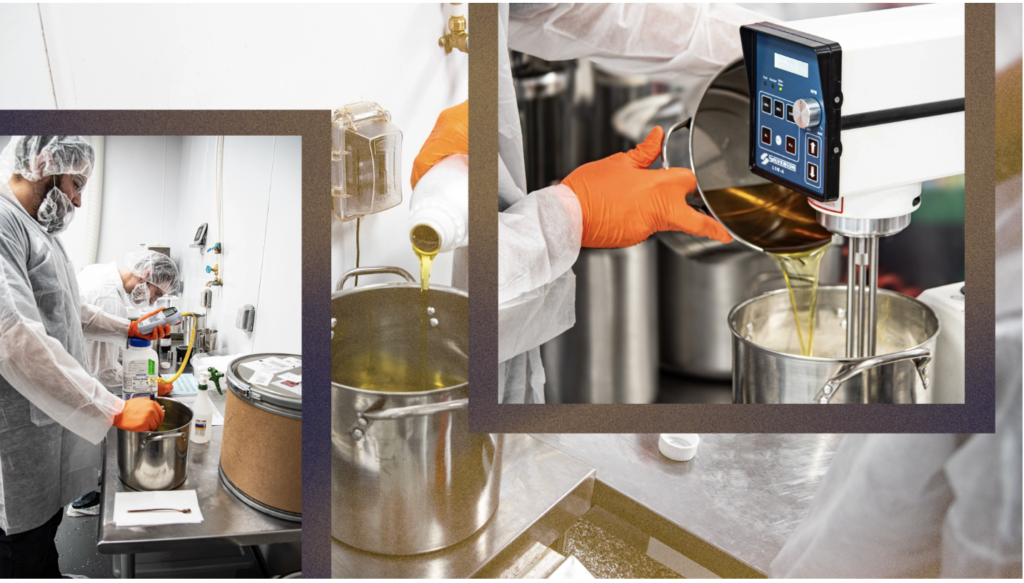
Revolutionizing Functional Beverages with Mile High Labs’ CBC Water Soluble Liquid
After countless hours in the lab, intensive testing, and collaboration with some of the brightest minds in the industry, we’re proud to introduce our newly formulated 20% CBC Water Soluble Liquid. Mile High Labs is redefining the cannabinoid-infused product market with our CBC Water Soluble Liquid. This advanced micro-emulsion liquid concentrate is the first of its kind, containing 20% CBC Isolate in a convenient, water-soluble form. Designed for seamless integration into beverages, it offers unmatched stability and consistency, making it a breakthrough choice for formulators in the functional beverage market.
Why does this matter? Because we know that behind every groundbreaking product is a need for reliability, consistency, and a formulation partner who understands what it means to push boundaries. This new ingredient isn’t just another addition to the market—it’s a demonstration of what can happen when innovation leads the way.
Unique Nature of CBC and Why There Are Currently No CBC Water Soluble Liquids on The Market
Cannabichromene (CBC) is a non-intoxicating cannabinoid found in cannabis, offering distinct benefits without the psychoactive effects of THC. Despite its potential, CBC has often been overshadowed by more widely recognized cannabinoids like CBD or CBG. Its unique interaction with TRPV1 and TRPA1 receptors, which play a role in various physiological processes, highlights its promise in wellness applications.
However, the development of water-soluble CBC liquids has been a challenge due to the technical complexities involved in making cannabinoids compatible with water-based systems. At Mile High Labs, our proprietary micro-emulsion process has made it possible to overcome these hurdles, paving the way for innovative CBC-infused beverages and other functional products. This breakthrough positions our CBC Water Soluble Liquid as a first-of-its-kind solution in the cannabinoid market. This innovation provides brands with a clean, reliable, and scalable solution to bring CBC cannabinoid products to market.
Key Benefits of Mile High Labs’ CBC Water Soluble Liquid:
- Stable & Reliable: With up to an initial 12 months of stability at room temperature, our CBC Water Soluble Liquid is built to last. We are also continuing our stability studies, so stay tuned for more updates as we progress.
- High Potency: Each 100ml formulation bottle has 20,000 mg of CBC, enough for up to 1,000 cans—ideal for soft launch or market testing. We also have our standard sizes for your convenience.
- Balanced Blends: When paired with our staple cannabinoids such as CBD, CBN, and or CBG; CBC integrates into your beverage without altering its flavor, contributing to a unique, functional profile.


The Non-Alcoholic Beverage Revolution
The non-alcoholic beverage industry is booming as consumers shift toward mindful drinking. Increasingly, people are seeking drinks that not only taste great but also enhance their wellness routines. Functional beverages, infused with cannabinoids like CBC, adaptogens, and nutrients, are leading this transformation by providing benefits beyond hydration. According to Leafly, CBC’s interaction with TRPV1 receptors suggests its potential in soothing discomfort and supporting wellness goals. This makes it particularly attractive to younger demographics looking for sophisticated, non-alcoholic alternatives that align with their active lifestyles.
Functional drinks infused with cannabinoids are bridging the gap between wellness and indulgence. While CBD dominates this space, CBC is emerging as a key ingredient due to its distinctive properties. As High Times Magazine notes, CBC may offer benefits related to mood regulation and overall balance within the body. By offering CBC-infused beverages, brands can stand out in a competitive market, delivering a unique and sought-after experience to consumers.
Why Now is the Time to Innovate with CBC
The current demand for non-alcoholic functional beverages presents a golden opportunity for brands to incorporate CBC. Unlike alcohol, CBC allows consumers a new option without intoxication, appealing to wellness-focused individuals. Mile High Labs’ CBC Water Soluble Liquid provides an easy way to capitalize on this trend, delivering a premium ingredient that enhances product appeal.
Trusted Resources for Beverage Innovators
Recommended Resources for Beverage Formulators: To support your product development journey, here are valuable resources that offer insights into beverage trends, packaging solutions, labeling, and canning—essentials for bringing a successful product to market.
- BevNET – A trusted source for industry news, product launches, and insights into trends across non-alcoholic and functional beverages, BevNET provides up-to-date information and expert commentary on what’s shaping the beverage industry. Visit BevNET
- Nosh – Focused on natural, organic, and wellness-oriented products, Nosh explores consumer demands and market dynamics in the functional beverage space, helping you stay attuned to shifts in wellness trends. Visit Nosh
- The Die Line – This leading site in packaging design and branding showcases innovative, visually compelling packaging. From inspiring design concepts to emerging packaging technologies, The Die Line offers inspiration to ensure your product stands out on the shelf. Visit The Die Line
- Leapin Lizard Labels – Specializing in custom labels, Leapin Lizard Labels supports brands with high-quality, durable labeling solutions. This resource helps ensure your product’s packaging meets branding standards while being equipped for real-world handling. Visit Leapin Lizard Labels
- Full Metal Canning – Full Metal Canning provides premium canning solutions for beverage brands, with a focus on quality, flexibility, and support. Their services are ideal for scaling up production while maintaining quality, which is essential for entering competitive markets. Visit Full Metal Canning
These resources keep you informed on industry trends, packaging, labeling, and canning solutions, empowering you to create standout CBC water-soluble cannabinoid formulations that resonate in the functional beverage market.
Functional Beverages and Cannabinoids: A Perfect Pair
With the popularity of functional drinks on the rise, cannabinoids like CBD and CBC have emerged as key ingredients in the non-alcoholic beverage space. These cannabinoids offer unique, non-intoxicating effects that align with consumer interests. Cannabichromene (CBC) is gaining attention for its potential benefits related to the endocannabinoid system, providing an option for consumers seeking a mindful and balanced approach to health. Unlike CBD, CBC interacts with TRPV1 and TRPA1 receptors, opening up new avenues for product differentiation in functional beverages. By formulating CBC-infused beverages, brands can capture the interest of consumers looking for alternatives without alcohol.


Why Mile High Labs?
Mile High Labs is committed to advancing the cannabinoid industry through rigorous product development, quality assurance, and consumer-focused solutions. With over 50 million units of finished beverages formulated annually, we have the expertise to support your brand’s goals in creating reliable and innovative products. At Mile High Labs, we’ve always believed that innovation happens at the intersection of expertise, passion, and a relentless drive to redefine what’s possible. That’s why we’re excited to share another milestone that we are incredibly proud of.
Why partner with us? As you plan for the rest of 2024 and into 2025, partnering with Mile High Labs positions your brand to lead in the functional beverage market. Our expertise in water soluble technologies ensures you stay ahead with innovative, high-quality products. With an industry-first concentration, we’re setting a new standard that enables product developers to explore previously unattainable possibilities.
For us, it’s not just about creating products. It’s about creating a platform for our partners to elevate their own formulations and achieve something exceptional. Because at the end of the day, it’s your vision we’re here to bring to life.
Request a Sample and Innovate with CBC Water Soluble Liquid
Ready to experience the possibilities of CBC cannabinoid products? Our CBC Water Soluble Liquid is ready for formulation, offering unparalleled ease and quality. We invite you to explore this product and unlock the potential of CBC Isolate in your beverage line. Request a sample today to discover why CBC Water Soluble Liquid could be the next big thing in your product innovation journey!
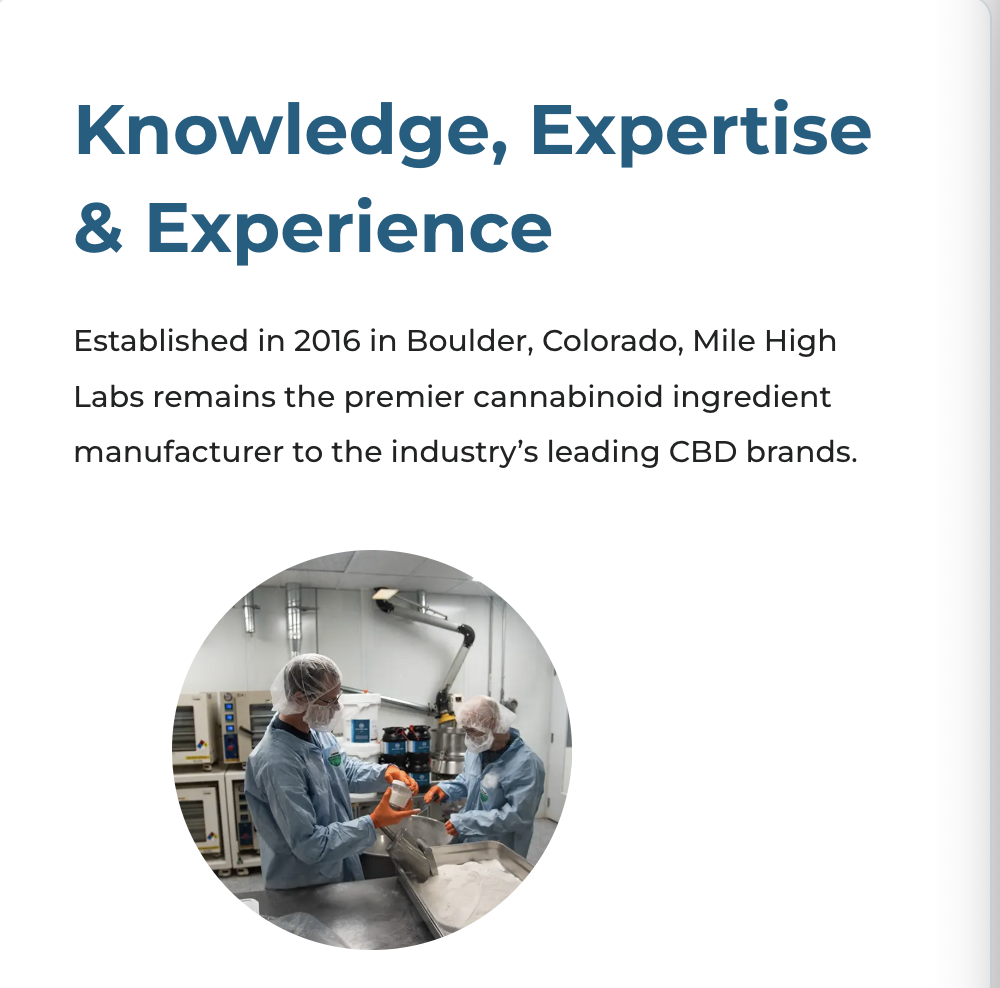
From Pioneers to Industry Leaders
The Power of Water Soluble Manufacturing
Sip with Precision: Mile High Labs’ Water Soluble Expertise Guarantees Accuracy and Performance in Every Drop. Microemulsion technology that is superior to conventional emulsification.
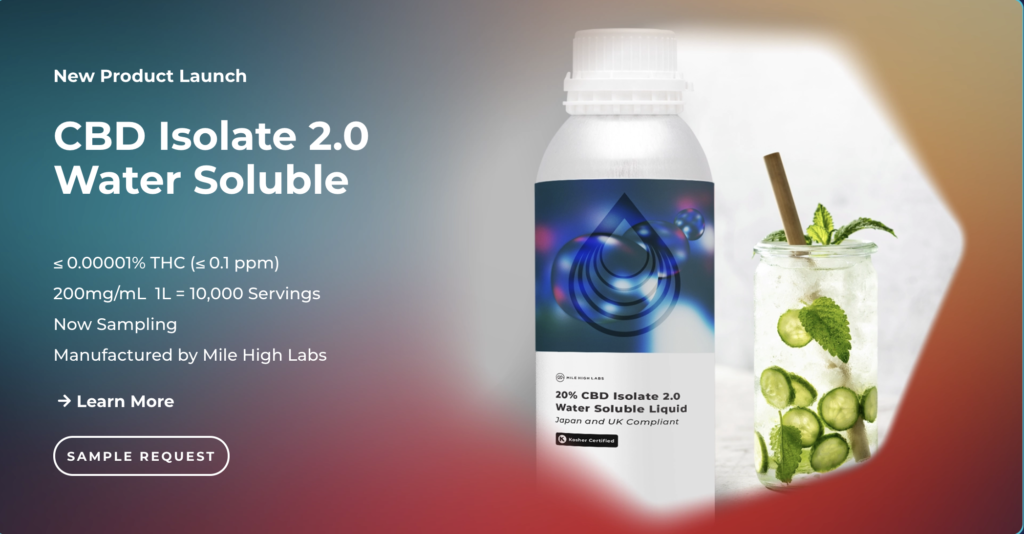
New Product Launch
CBD Isolate 2.0
Water Soluble
≤ 0.00001% THC (≤ 0.1 ppm)
200mg/mL 1L = 10,000 Servings
Now Sampling
Manufactured by Mile High Labs
Custom Manufacturing Capabilities
Liquid Microemulsions
Enhance your beverages with our liquid micro-emulsions—offering superior bioavailability, regulatory compliance, and stability, while being free from nano-particles and providing a safer alternative to nano-emulsions.
Functional Ingredients
Transform your beverage ideas into reality with Mile High Labs—expertly crafting custom water-soluble formulations with the functional ingredients you envision, designed to meet market demand and boost your brand’s appeal.
Cannabinoids
Leverage our expertise with in CBN, CBG, and CBD water-solubles, and expanding into minor cannabinoids, featuring advanced 20% loaded formulations for higher concentrations, superior cost-effectiveness, and greater value compared to competitors’ 5-10% loadings.
Multivitamins
Collaborate with Mile High Labs to create custom multivitamin formulations, tailored to your needs—emphasizing health and wellness through our apothecary model. Leverage our expertise, global regulatory knowledge, and innovative approach to drive high-quality beverages that maximize your ROI.
Adaptogens
Partner with Mile High Labs to create high-quality adaptogen-infused beverages. Harness the power of popular adaptogens like ashwagandha to meet the growing consumer demand for holistic health solutions. Our expertise ensures innovative formulations that support stress resilience and mental clarity, positioning your brand at the forefront of the wellness market.
Agglomerated Powder
Enhance your beverage formulations with Mile High Labs’ advanced agglomerated powders. Our technology ensures superior solubility and rapid mixing, perfect for instant beverage applications. Achieve consistent, high-quality results and efficient cannabinoid delivery, meeting consumer demand for fast-acting and reliable products.
Why Our Water Soluble Microemulsion
Liquid Concentrates Reign Supreme
Maximize your investment and experience superior value with our innovative, highly concentrated products. Our formulations deliver unmatched quality and effectiveness without additional additives, ensuring you get the best results while optimizing your costs.
High concentration and cost efficiency
Our flagship products boasts a cannabinoid concentration of 200,000mg of CBD, CBN, or CBG per liter, enabling you to produce up to 20,000 servings per 10mg from just one liter. From a manufacturing perspective, water soluble cannabinoids can be produced at scale more efficiently.
Mile High Labs
20% CBD Isolate Water Soluble Liquid
CBD Per 1L = 200,000mg/L or 200mg/mL
Competitor
5% CBD Isolate Water Soluble Liquid
CBD Per 1L = 50,000mg/L or 50mg/mL
Flagship Cannabinoids: Reliable, Ready, and Inspiring Innovation
Explore our top-tier cannabinoid solutions, always in stock and ready to enhance your formulations. With a 2-year shelf life and extensive market usage, our flagship CBD, CBN, and CBG water-soluble products provide a reliable foundation for your innovative beverage creations.
20% CBD Isolate 2.0 Water Soluble Liquid

- 20% CBD Isolate
- 200,000 mg/L or 200mg/mL
- Kosher Certified
- Micro-Emulsified Concentrate
- 2-year shelf life
- Japan and UK Compliant
Mile High Labs 20% CBD Isolate 2.0 Water Soluble Liquid is a micro-emulsion liquid concentrate that is dispersible in almost any beverage or liquid food. Formulated with pure CBD Isolate 2.0, our water soluble CBD’s ease of use, long shelf-life stability and minimal impact on flavor and mouthfeel make it the ideal CBD beverage solution.
Japan and UK Compliant Water Soluble CBD Isolate 2.0
Introducing our new and improved product 20% CBD Isolate 2.0 Water Soluble Liquid. This product is a micro emulsified, viscous concentrate that disperses seamlessly into most liquid-based systems, including beverages, functional shots, and nutraceuticals.
With 200mg/mL of CBD, even small quantities yield powerful results:
- 25mg CBD per can? Just 0.125mL
- 30mg per serving? 0.15mL.
- Need to scale? One 100mL bottle makes up to 1,000 cans
This format is ideal for beverage manufacturers and personal care formulators who want a virtually tasteless, crystal-clear solution that doesn’t interfere with mouthfeel, flavor, or shelf-life.
Key Features
- ≤ 0.00001% (≤ 0.1 ppm), THCA, THCV, Δ8/Δ9, and CBN — compliant with Japan’s Narcotics Control Law and the UK’s Novel Foods framework, supported by toxicology studies on Mile High Labs-manufactured CBD Isolate
- Micro-emulsified at 200mg/mL — seamless dispersion with minimal volume
- ISO 17025-verified + NSF GMP-manufactured — real compliance, not just claims
- One 100mL bottle = 1,000 servings at 20mg CBD
Extra Rigor for Aqueous Products
The 0.1 ppm limit is among the strictest globally, especially for water-based products. Verifying THC content at this level demands sophisticated instrumentation and protocols. Not all labs are equipped to meet this standard, which is why Mile High Labs works only with qualified partners that have validated Limits of Detection (LOD) and Limits of Quantitation (LOQ) capable of identifying trace cannabinoids with high accuracy. This level of diligence ensures confidence in compliance—not just in theory, but in practice.
Potency
- CBD Content: 20%
- Concentration: 200,000 mg or 200mg/mL
Key Specifications
- Kosher Certified
- Japan and UK Compliant
Available Sizes:
- 15ml Sample (contact our global sales team)
- 100ml Formulator
- 1L
- 5L
| Packaging – Aluminum Bottle with Polyethylene Liner – This bottle is designed with food safety in mind and features a tamper-evident seal for added security. It is UV protected to preserve the contents from light exposure and comes equipped with a plastic plug and lid for secure closure. |
| Characteristics: Emulsified liquid concentrate |
| Shelf Life: 24 Months from manufacture |
| CBD Content: 20% |
| Concentration: 200,000 mg/L or 200mg/mL |
Usage Recommendations: Mix contents thoroughly before adding concentrate to product batch. Mix the batch thoroughly to disperse the emulsion homogeneously.
Learn More About Our Ingredients!
Expand your Business Operations and Value
Water Soluble
Finished Goods
Cannabinoids
Industry-Leading Investments In Quality
Mile High Labs doesn’t just meet the quality standards for CBD—we set them. Our team of professionals, and our commitment to quality management systems, allows us to guarantee that what’s on the label matches what’s in the bottle. Our quality commitment is a promise we keep throughout our entire process—from the farm, to the lab, to you. It’s a pledge to protect our customers, our consumers and our industry, now and into the future.
Do you have additional product information questions?
What is the difference between CBD full spectrum and isolate?
Full spectrum extracts contain CBD as well as a plethora of other cannabinoids, including THC. Isolate is CBD in its purest form and only contains cannabidiol. Check out our blog post “Why Choose Isolate?” for more information.
What is the difference between CBD and THC?
Why do some potency tests go over/under 99% CBD?
Where can I educate myself on CBD?

20% CBD Isolate Water Soluble Liquid
- 20% CBD Isolate
- 200,000 mg/L or 200mg/mL
- Kosher Certified
- Micro-Emulsified Concentrate
- 2-year shelf life
Easily pairs with adaptogens and functional ingredients
20% CBN Isolate Water Soluble Liquid
- 20% CBN Isolate
- 200,000 mg/L or 200mg/mL
- Kosher Certified
- Micro-Emulsified Concentrate
- 2-year shelf life
Suitable for wellness and nighttime formulations
20% CBG Isolate Water Soluble Liquid
- 20% CBG Isolate
- 200,000 mg/L or 200mg/mL
- Kosher Certified
- Micro-Emulsified Concentrate
- 2-year shelf life
Versatile and ideal for innovative formulations, enhancing focus and clarity, and supporting overall wellness
20% CBD Isolate with Ashwagandha
Water Soluble Liquid
- 20% CBD Isolate
- 5% Ashwagandha
- CBD Per 1L 200,000 mg/L
- Ashwagandha Per 1L 50,000 mg/L
- Micro-Emulsified Concentrate
- Made to order
20% CBD Isolate with Vitamin D3
Water Soluble Liquid
- 20% CBD Isolate
- CBD per 1L 200,000 mg/L
- D3 – 0.012 µg
- D3 – 4,800,000 IU/L
- Vitamin D3 Per 1L = 120 mg/L
- Micro-Emulsified Concentrate
- 9-month shelf life
- Made to order
20% CBC Isolate Water Soluble Liquid
- 20% CBC Isolate
- CBC per 1L 200,000 mg/L
- Micro-Emulsified Concentrate
- 12-month shelf life
10% CBD Distillate Water Soluble Liquid
- 10% CBD Distillate
- 100,000 mg/L or 100mg/L
- ≤ 0.2% THC
- Kosher Certified
- Micro-Emulsified Concentrate
- 2-year shelf life
10% FreshWater™ Soluble CBD Isolate Liquid
- 10% CBD Isolate
- 100,000 mg/L or 100mg/L
- Kosher Certified
- Micro-Emulsified Concentrate
- Made with natural ingredients
- 2-year shelf life
Free from sodium benzoate, parabens, and preservatives
CBD Isolate Water Soluble Powder
- 18-22% CBD Isolate
- 2-year shelf life
- Dry Blend Versatility
- Clean and Natural
- Agglomerated Options
- Tailored for Food and Beverage
- Made to order
CBD Broad Spectrum Water Soluble Powder
- 18-22% CBD Isolate
- THC ≤ 0.2%
- 2-year shelf life
- Clean and Natural
- Agglomerated Options
- Tailored for Food and Beverage
- Made to order
New Products
Coming Soon!

Water Solubility and Bioavalability
How to solve for low bioavailability of oil in the human body
Approximately 60% of the human body’s weight consists of water, which is why the bioavailability or absorption of oils is typically limited to a range of 5% to 10%. This limitation arises from the fact that oil and water do not readily mix. Water exhibits strong surface tension, a force that arises from the attraction between surface particles and the bulk of the liquid, which tends to minimize the surface area of the liquid.
Surfactants and bioavailability
Revolutionizing cannabinoid delivery
There are several methods involving microtechnology that manufacturers can use to make CBD water-soluble or dispersible. The most common methods involve breaking down the large CBD oil droplets into smaller droplets using the process of ultrasonic cavitation, or high-pressure homogenization.
Emulsifier Solutions
The creation of micelles
The process begins with dissolving CBD isolate or distillate along with a carrier oil and a low HLB emulsifier to form the oil phase. Simultaneously, the water phase, containing water, preservatives, and a high HLB emulsifier, is prepared. Each phase is meticulously crafted with distinct emulsifiers to attain the precise Hydrophilicity-Lipophilicity Balance (HLB) essential for stabilizing the given combination of oils. Subsequently, the two phases are combined and emulsified to achieve the desired product stability.
Micelle
Cationic monomer
When making oil-in-water emulsions, the emulsifiers self organize into micelles that are organized in such a way that the hydrophobic (water hating) tails of the emulsifiers are pointed towards the oil droplets in the core of the micelle, and hydrophilic (water loving) heads are pointing outwards towards the surrounding water. The smaller the micelles, the smaller the oil droplet in the core, the higher is the bioavailability/absorption of that oil droplet in the body.
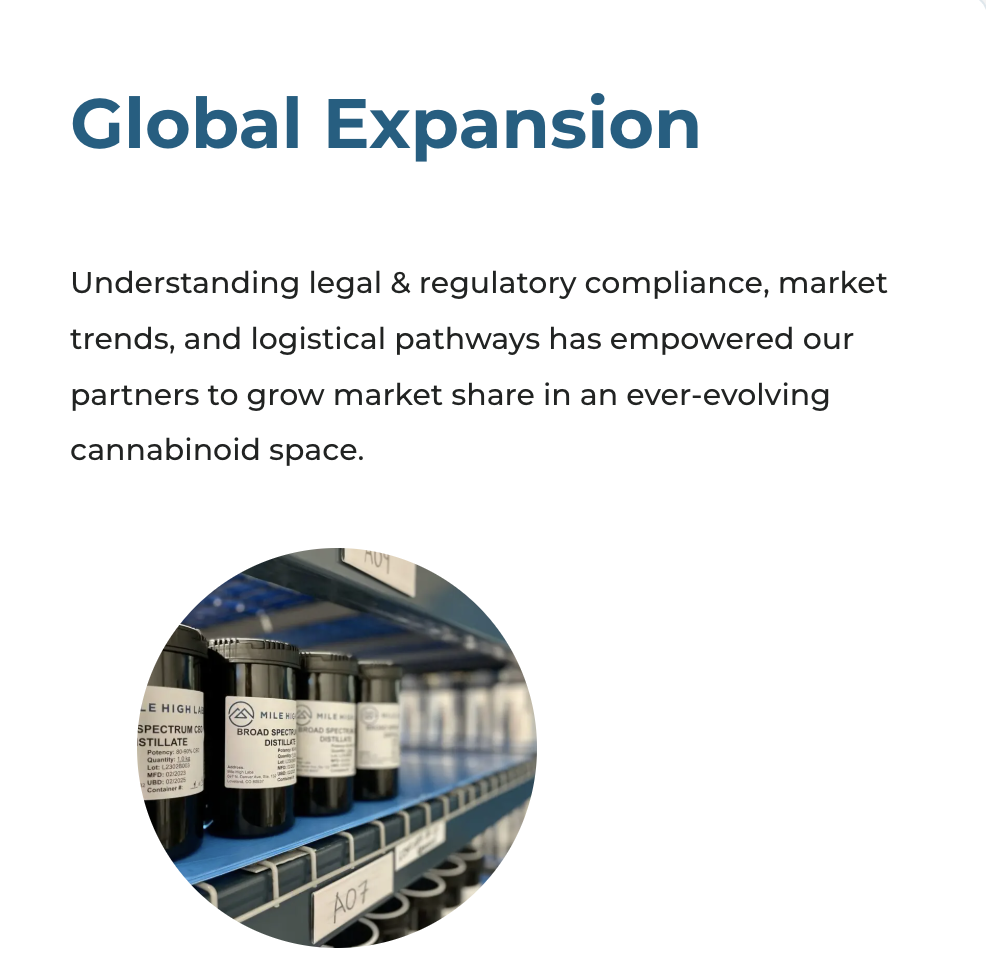
Go Global
With Mile High Labs
Mile High Labs Is Global. Are You?
Mile High Labs established in the UK in October 2018.
International Head Quarters for sales and distribution located in Belfast Northern Ireland.
7,000 Square Foot warehousing and office space.
Servicing customer growth in 35 countries within the UK, EU, Australia, Asia, and South Africa.
Dedicated distribution partner located in mainland Europe.
End to End White Label product packaging solution in-house.
Mile High Labs Ingredients Are The Engine to Drive Your Success
Our ingredients are formulated into multiple SKUs listed in major retail outlets and online stores world-wide. We can help you achieve the same!
Our partners trust us to provide quality, compliant, consistent, and tracible ingredient through a tried and tested supply chain. This is key to achieving successful listings under the correct categories within major retail provider.
We provide ingredient solutions to the largest CBD Drinks Brands Globally!
Our finished goods solutions power the largest CBD Gummy Brands in the UK and EU.
- Our ingredients are formulated into multiple SKUs listed in major retail outlets and online stores world-wide. We can help you achieve the same!
We Only Succeed If You Do
- Our team has 30+ years combined experience in the CBD industry.
- We understand the challenges of bringing a CBD product to market in an every evolving regulatory and compliance driven world.
- To us, it is more than just a transaction. We have a vested interest in helping you to become successful.
- We become part of your team. We endeavor to understand your business goals and aspirations and provide suitable product solutions to help make them a reality while giving you peace of mind that you will remain compliant throughout.
- We provide our knowledge and experience to assist with your evolution.
With Our Help It Is As Easy As CBD. Concept, Build, and Distribute.

Pre Sale Added Value
- Understand your business needs.
- Product identification.
- Target Market.
- Challenges to overcome.
- Qualification of Mile High Labs to our customer.
Sale and Delivery
- Product solution.
- Supply chain management.
- Supporting document management.
- Finance options.
- Shipping options using registered shipping services.
- Same day shipping.
Quality
Stability protocols.
Assist with issues surrounding quality of formulation.
Manufacturers questionnaire completion.
Supplier documentation for your down stream customers.
Client liaising.
Host customer in-house audits.
Understand COA for finished products .
Stability protocols.
Added Value with Mile High Labs
Compliance
- Advise on geographical compliance.
- Regional product label compliance.
- Sector specific compliance.
- Novel Foods evolving issues.
- Bespoke product formulation per region.
Logistics
- Onward shipping of ingredients to manufacturing location.
- Advice on best shipping partner for your region.
- Suggested distribution partners UK/EU/USA.
- Understanding customs and import.
Above and Beyond Quality and Compliance
- Continued communication on industry status.
- Assist with new product ideas and development.
- Forecasting to assist our own production capabilities.
- New industry opportunities.
Why We Are Confident About the Future of CBD


For our UK application we have structured our dossier with our customers in mind and have included them at no cost.
Novel Foods has determined the UK/EU CBD industry roadmap to regulatory compliance since early 2020.
Once authorisation has been achieved, it gives the CBD industry in the UK and EU a clear pathway for compliant CBD products to enter main-stream consumerism.
We have been validated in both the U.K. and EU.
Our applications and data held there in is based solely on MHL ingredient, processes, and data.
We are not reliant on 3RD party data to be successful, it is all our own work.
For our UK application we have structured our dossier with our customers in mind and have included them at no cost.
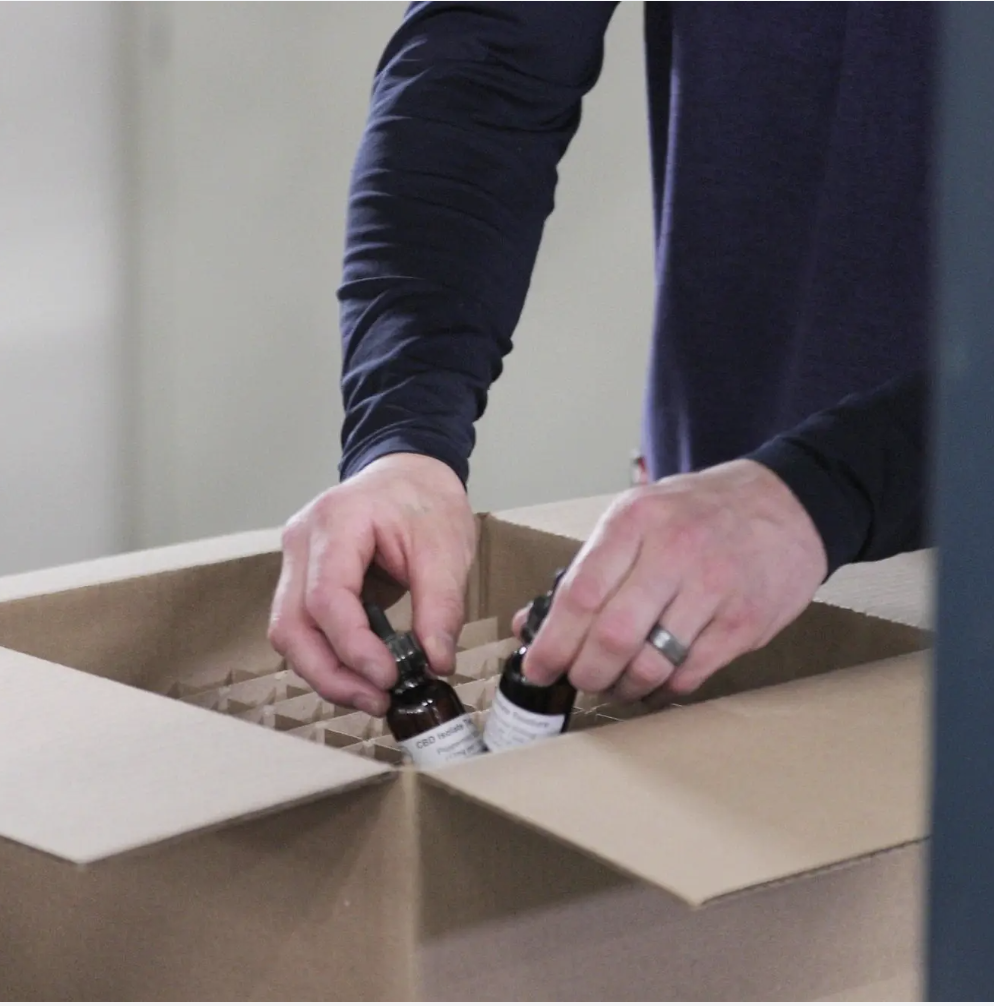
Industry-Leading Investments In Quality
Mile High Labs doesn’t just meet the quality standards for CBD—we set them. Our team of professionals, and our commitment to quality management systems, allows us to guarantee that what’s on the label matches what’s in the bottle. Our quality commitment is a promise we keep throughout our entire process—from the farm, to the lab, to you. It’s a pledge to protect our customers, our consumers and our industry, now and into the future.
Do you have additional product information questions?
What is the difference between CBD full spectrum and isolate?
Full spectrum extracts contain CBD as well as a plethora of other cannabinoids, including THC. Isolate is CBD in its purest form and only contains cannabidiol. Check out our blog post “Why Choose Isolate?” for more information.
What is the difference between CBD and THC?
Why do some potency tests go over/under 99% CBD?
Where can I educate myself on CBD?
From Molecule to Market—Stay in the Know
By clicking subscribe you’re confirming that you agree with our Terms and Conditions.EmailSubscribe
Subscribe for updates on cutting-edge cannabinoids, new launches, and expert insights.